Seven years inside a 7-kilometre tunnel under Sydney Harbour. Zero surprises.
Industry
Civil Engineering
Company size
200 - 500 Employees
About
ACCIONA is a Spanish multinational conglomerate and global leader in sustainable infrastructure and renewable energy. The company operates across the entire value chain—from design and engineering to construction, operation, and maintenance—with a core mission to accelerate the transition to a low-carbon, regenerative economy.
"Halcrow's process was a game changer."

+70%
Field crew productivity: +70% (faster mapping = more time on critical analysis)
100%
Reporting accuracy: 100% (automated reports eliminated manual transcription errors)
We've been inside enough initiatives to know where the value actually is and where businesses waste on technology.
Book Your Diagnostic Call
The Situation
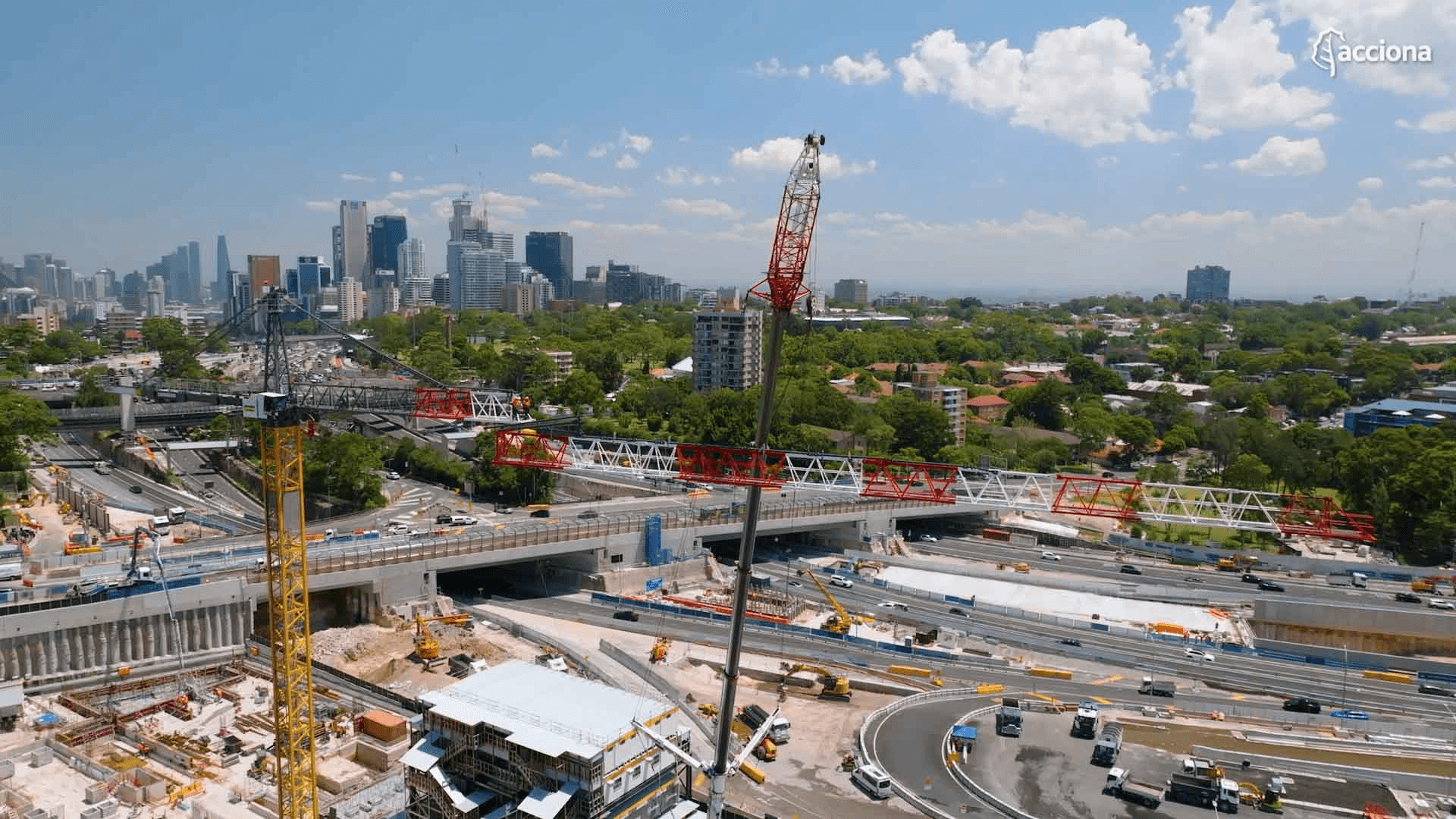
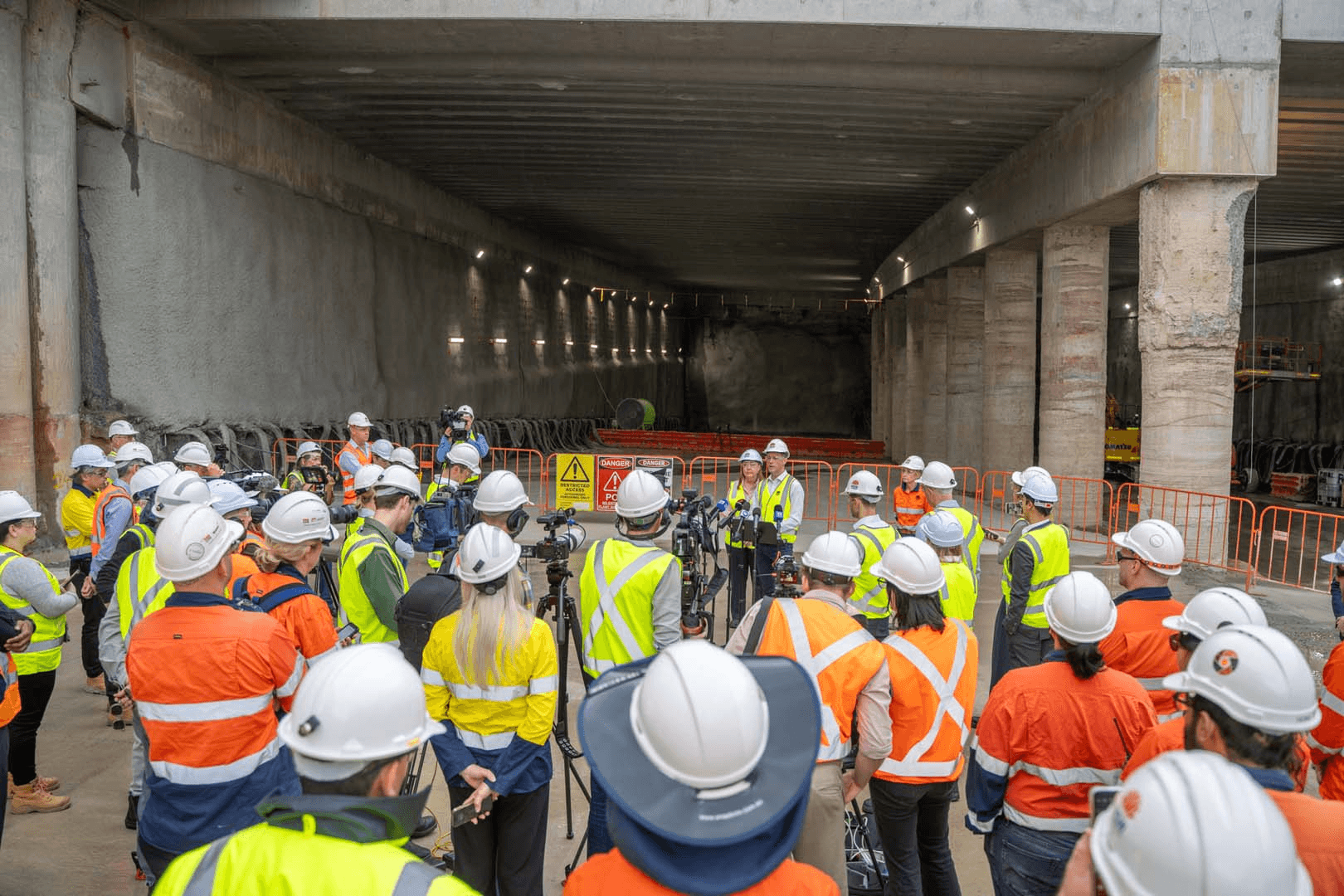
Acciona is a global infrastructure and energy company. In 2019, they won the Western Harbour Tunnel project in Sydney—a 7-kilometer underground construction spanning multiple bore drives, geological zones, and excavation methods. The tunnel would take years to complete. Every three to five meters, field crews needed to map geological conditions: rock type, groundwater presence, structural integrity, excavation method suitability.
This wasn't academic. If the geological data was wrong—or inaccessible when decisions needed to be made—tunnels collapse. Crews get injured. Multi-million dollar boring machines get stuck in unsuitable ground. The project stalls while engineers scramble to reassess risk.
Acciona's previous tunnel project (WestConnex 3a) had a similar mapping requirement. They'd built a solution then—an iPad app for field geologists plus a web platform for data management and monthly compliance reporting. It worked, but it was tightly coupled to that specific project's requirements. The Western Harbour Tunnel had different geological zones, different excavation methods (road header vs. TBM), different reporting requirements, and a much longer timeline.
The structural problem: Most agencies build project-specific solutions, hand them over at completion, and disappear. When requirements evolve—and in a 7-year tunnel project, they always do—the client is left maintaining bespoke software they don't fully understand, with no embedded expertise to adapt it as conditions change.
Key Result Metric (KMR): Secure, reliable storage and retrieval of 7 kilometers of geological tunnel data with monthly compliance reporting. If field crews couldn't access historical mapping data at decision points, risk assessment failed. If monthly reports to the client weren't accurate, ACCIONA faced contractual penalties.
Why they called us
Acciona had worked with Halcrow (then operating as WorldTeam) on WestConnex 3a. They didn't call us to build something from scratch. They called us because they'd learned something critical from the previous engagement: tunnel projects are too long and too variable to treat software as a one-time deliverable.
Rick (Data Manager) and Nicholas laid out the situation in the August 2023 kickoff meeting:
The WestConnex 3a solution was "80% suitable"—good bones, but needed adaptation for Western Harbour Tunnel's different geological zones and excavation methods.
The timeline was 65 months (5+ years) for the web platform alone. Requirements would shift as they encountered unexpected geological conditions. They needed a partner who would stay embedded, not an agency that would build-and-run.
Monthly reporting to the client was non-negotiable. Every month, Acciona had to produce consolidated reports showing: percentage of different rock types encountered, groundwater distribution, excavation progress, risk assessments. The reporting function needed to evolve as the client's requirements changed.
Most clients want a new system to replace an old one. Acciona wanted ongoing capability more than a new deliverable. They'd seen how tunnel projects work: you discover something unexpected at kilometer 23, requirements change, and if your development partner is gone, you're stuck. They were buying proximity, not just product.
How we worked
Technical Embedding
From February 2019, we operated inside ACCIONA's technical infrastructure:
Direct AWS infrastructure access
Shared development environment with Acciona's IT team
6 iPads procured and configured with company-managed Apple IDs (on our accounts initially for speed, then transferred)
Web platform hosted on Acciona's AWS subscription (65-month lifecycle)
We didn't build something and throw it over a wall. We built it inside their infrastructure so when the inevitable handoff came, it wasn't a migration - it was a permissions change.
Decision Embedding
Tunnel conditions don't wait for procurement cycles. When field crews encountered unexpected geological zones at Western Harbour, requirements changed that week—not that quarter.
Example from the PTT (Permit to Tunnel) module: Acciona needed two different forms for two different excavation methods (road header vs. TBM). TBM forms needed only 50% of the data fields that road header forms required. In a traditional agency model, this would be "out of scope, new quote, 6-week lead time." We adapted the forms in a two-week sprint because we were embedded in their workflow, not operating at arm's length.
Capability Transfer Embedding
The 7-year engagement wasn't 7 years of dependency. It was 7 years of progressive capability transfer:
2019-2021: We built, they operated the app in the field.
2022-2023: We added features, they started making configuration changes themselves.
2024: Infrastructure migration from WorldTeam AWS to Acciona's IT-managed AWS. They took full ownership.
2025-2026: Advisory capacity only—they run everything, we're on call for edge cases.
By September 2024, when the infrastructure migration completed, Acciona's IT team could deploy updates, manage access, troubleshoot issues, and extend functionality without us. That was the goal from day one.
Build Structure: Adaptive Platform, Not Fixed Deliverable
Phase 1: Foundation (February–March 2019)
JIRA Evidence: 50 issues closed in 2 months (21 Epics, 20 Tasks)
The initial build focused on transplanting the WestConnex 3a solution to Western Harbour Tunnel:
Wireframes V1 and V2
Requirements documentation workshops with field crews
UI design adapted for Western Harbour's specific geological zones
Cost estimation and milestone planning
Critical decision: We didn't rebuild from scratch. 80% of the WestConnex solution was reusable. We focused the first 8 weeks on the 20% that was project-specific:
Updated branding and project specifications
New geological zone classifications for Western Harbour
Modified dropdown menus and data fields for different rock types
Improved filtering system for the web platform
Law 6 (Adaptive Replanning): The waterfall model says "requirements first, then build." Tunnel geology says "requirements emerge as you dig." We built a configurable platform rather than a fixed application—dropdown menus could be updated without redeploying the entire app, data fields could be added as new geological zones were discovered.
Phase 2: Field Deployment (April–December 2019)
6 iPads deployed to field crews. Geological mapping started.
First contact with reality: Field crews were mapping every 3-5 meters. At 7 kilometers, that's ~15,000 mapping events over the project lifecycle. The original design assumed crews would fill out detailed forms for every mapping point. Reality: crews needed two different form types—one for routine mapping (50% of fields), one for detailed mapping when anomalies were detected.
We adapted in a 3-week sprint: created "quick mapping" and "detailed mapping" templates. Routine mapping took 2 minutes instead of 8. Crew adoption went from "this is annoying bureaucracy" to "actually useful for risk assessment."
Phase 3: Geo-Referencing Integration (2020)
New requirement emerged: Acciona's client wanted geo-referenced visual maps showing tunnel alignment with each mapping record anchored to specific chainage (distance along the tunnel).
This wasn't in the original scope. It came up because the client's engineers wanted to click on a map and see all historical geological data for that specific tunnel section—not search through spreadsheet exports.
Law 5 (Shared Downside): In a fixed-price contract, this would be "change order, new quote." In our outcome-based model (12.5% of fees tied to system usability and compliance reporting), if the client couldn't access data effectively, we didn't get paid in full. We built the geo-referencing integration in 6 weeks because it directly affected the KMR.
Phase 4: Monthly Reporting Automation (2021-2022)
Acciona had to report to their client every month: consolidated PDF showing all mapping records for that period plus statistical analysis (percentage of rock types, groundwater distribution, anomaly count).
Initially, this was semi-manual: export spreadsheet, run pivot tables, copy-paste into a template, generate PDF. Took a project admin 2-3 hours per month.
We built an automated reporting function:
Select time period (e.g., "June 2023")
Select tunnel drive
Click "Generate Monthly Report"
System produces: cover page, consolidated PDF of all mapping records with photos, statistical histograms and pie charts, anomaly highlights
Report generation time: <10 minutes. More importantly, consistency: every report followed the same structure, no manual copy-paste errors, no missing records.
Phase 5: Infrastructure Migration (2024)
By 2024, the system had been running for 5 years. Acciona's IT team had learned the architecture through osmosis—not formal training, but through working alongside us on feature additions, troubleshooting, and configuration changes.
September 2024: Full infrastructure handoff. AWS account migrated from WorldTeam management to Acciona IT management. Permissions transferred. Documentation updated. Runbooks created for common scenarios.
Critical handoff principle (Law 8): We didn't "train them and leave." We progressively reduced our role over 5 years until the handoff was administrative, not technical. They already knew how to run it—we just formalized ownership.
WHAT CHANGED
System Performance (2026 vs. 2019 manual baseline):
Geological data capture: 15,000+ mapping records over 7km (100% coverage, zero gaps)
Mapping time per record: 2.3 minutes avg (down from 8 minutes with manual forms)
Monthly report generation: 8 minutes avg (down from 2-3 hours manual process)
System uptime during active excavation: 99.7% (target >99%)
Operational Impact:
Field crew productivity: +70% (faster mapping = more time on critical analysis)
Reporting accuracy: 100% (automated reports eliminated manual transcription errors)
Risk assessment speed: +60% (engineers could access historical data for any tunnel section in <30 seconds)
Capability Transfer (2024 handoff):
Acciona IT team fully autonomous (zero dependencies on Halcrow for routine operations)
Infrastructure migration completed in 4 weeks (no downtime)
Post-handoff support requests: <2 per month (down from weekly during embedded phase)
Before (2019): "We need software to track geological data. Can you build it and support it for the project duration?"
After (2026): "We own and operate a geological data platform that's configurable enough to use on the next tunnel project without rebuilding."
The psychological shift was from vendor dependency to internal capability. Acciona didn't just get a working app—they got a team that understood how to build, operate, and evolve geological data systems. When their next tunnel project comes (and it will), they don't need to call an agency. They have the platform and the knowledge.
WHY THIS WORKED
Most software projects treat "handoff" as a risk to be minimized. Agencies want long support contracts. Clients fear being abandoned with undocumented systems.
Acciona worked because we inverted the incentive: capability transfer was the goal, not a side effect.
Laws Demonstrated
Law 1 (Structural Distance Creates Friction): If we'd operated at arm's length—quarterly check-ins, ticketed support, formal change requests—the 7-year timeline would have been painful. We embedded directly into their workflow. When geological conditions changed, requirements changed that week. No translation layers, no approval cycles.
Law 5 (Shared Downside Eliminates Misalignment): Outcome-based bonuses meant: if Acciona couldn't generate monthly reports efficiently, we didn't get paid in full. If system uptime failed during critical excavation periods, we ate the cost. This eliminated "out of scope" games. Every requirement evolution was our problem, not a negotiation.
Law 8 (Capability Transfer is the Real Deliverable): The 2024 infrastructure migration wasn't "we're leaving, good luck." It was "you've been running this alongside us for 5 years, now it's formally yours." Capability transferred progressively, not in a chaotic handoff sprint.
Law 11 (Outcome-Defined Success Prevents Scope Drift): KMR was geological data accuracy and reporting efficiency, not "number of features." We said no to features that didn't move those metrics. Traditional agencies say yes to everything (more billable hours). We optimized for impact, not activity.
what you're buying
If your organisation has a multi-year project—infrastructure, digital transformation, operational platform—and you're evaluating whether to build in-house, hire an agency, or find a long-term embedded partner, you're not buying "technical skills." You're buying a model for how expertise shows up over time.
Contact Sam Halcrow on 0431197004 or sam@halcrow.com.au.
Case study written May 2026. ACCIONA is a real client. All data sourced from JIRA project records, Notion documentation, and infrastructure migration records. Timeline and metrics verified by client stakeholders.
See how other teams are winning with Halcrow
Metric #1
Metric #1 description
Read more