
SAP Integration for Global Food Manufacturing Cost-Modeling
Industry
Manufacturing
Company size
50 - 200 Employees
About
AGRANA is an internationally-oriented Austrian industrial company that adds value to agricultural commodities to create sustainable food and industrial products. With approximately 9,000 employees and €3.2 billion in revenue, it is the world's leading manufacturer of fruit preparations and a major European supplier of starch and sugar.
"Their competency, attention to details, and soft skills of business analysts were impressive."

We've been inside enough initiatives to know where the value actually is and where businesses waste on technology.
Book Your Diagnostic Call
The Situation
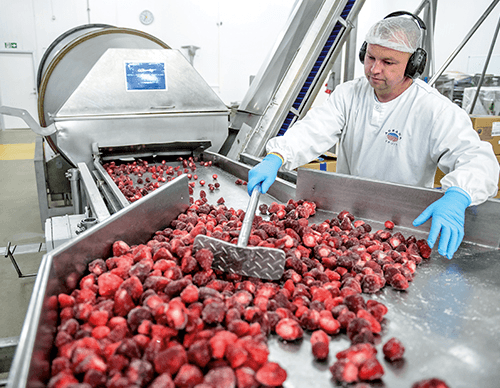
Agrana is a global leader in food and industrial products: fruit preparations, juice concentrates, starch, bioethanol. Their customers are large-scale food manufacturers — dairy, bakery, ice cream, confectionery — ordering ingredients at industrial quantities. An order for banana puree might be 100 tonnes. A fruit preparation specification might require dozens of raw material inputs priced simultaneously across multiple supplier relationships.
When a sales team needs to price a customer order of this scale, they need to pull current raw material prices from SAP, apply a cost-modelling methodology that accounts for production conditions (which silo, which packaging line, which market conditions), and produce a price. Doing this manually — navigating SAP's interface and reconciling data in Excel — was the process. It was slow, error-prone, and inconsistent across the sales team.
The Agrana application — internally named "Agrana" — was built to solve this: a web-based cost-modelling tool that integrates directly with SAP to pull live raw material data, applies Agrana's cost calculation methodology, and produces a price output that a salesperson can use with confidence.
Why they called us
SAP integration layer:
Live pull of raw material prices from SAP (customers, finished product BOMs, customer-material assignments, raw materials)
Data normalised into the Agrana cost calculation schema
Refresh cycle: prices updated on SAP sync, not cached indefinitely
Silo-based cost modelling: The Agrana production methodology is organised around silos — production units with specific conditions that affect cost. The cost model for a given order depends on which silo will produce it.
Silo configuration: basic settings, calculation patterns, production conditions, packaging specifications, impact matrix, raw material group assignments
Silo-specific raw material pricing: price overrides for specific raw materials when used in specific silos
Costing overview: full bill of materials (BOM) breakdown, show/hide capability for client presentations
Reporting:
Overview report: all active silos, current cost models, margin summary
Comparison reports: silo-specific raw material price comparison, production condition comparison, silo item comparison
The BOM presentation feature:
A key user request from the sales team: when presenting pricing to a customer, they wanted to be able to show or hide the BOM detail. Some customers wanted full ingredient and cost breakdown transparency. Others wanted a single price. The show/hide BOM feature let the salesperson control the presentation without creating two separate documents.
what you're buying
This is a case study in a very specific type of problem: a business process that works, but only just — held together by a combination of institutional knowledge, manual discipline, and tolerance for inconsistency. Agrana's sales team wasn't broken. They were pricing orders. It just took half a day, required SAP expertise most salespeople don't have, and produced results that varied depending on who was doing the work.
What Halcrow built wasn't a new process. It was the same methodology, made reliable. The SAP integration means the data is live. The calculation engine means the methodology is consistent. The BOM show/hide means the output is presentable. The salesperson still makes the call — they just make it in 15 minutes instead of four hours, with a number they can stand behind.
If you have a workflow that depends on people doing the right thing in the right order with the right data pulled from a system that wasn't designed for them — this is the type of engagement we do.
—-
Case study written May 2026. Agrana Fruit is a real client. SAP is Agrana's real ERP. All data sourced from project sprint records and client operational feedback.
See how other teams are winning with Halcrow

No engineering team. No platform. A hard deadline. We supplied the full build capability — 30 EV charging locations deployed inside business parks.
Metric #1
Metric #1 description
Read more