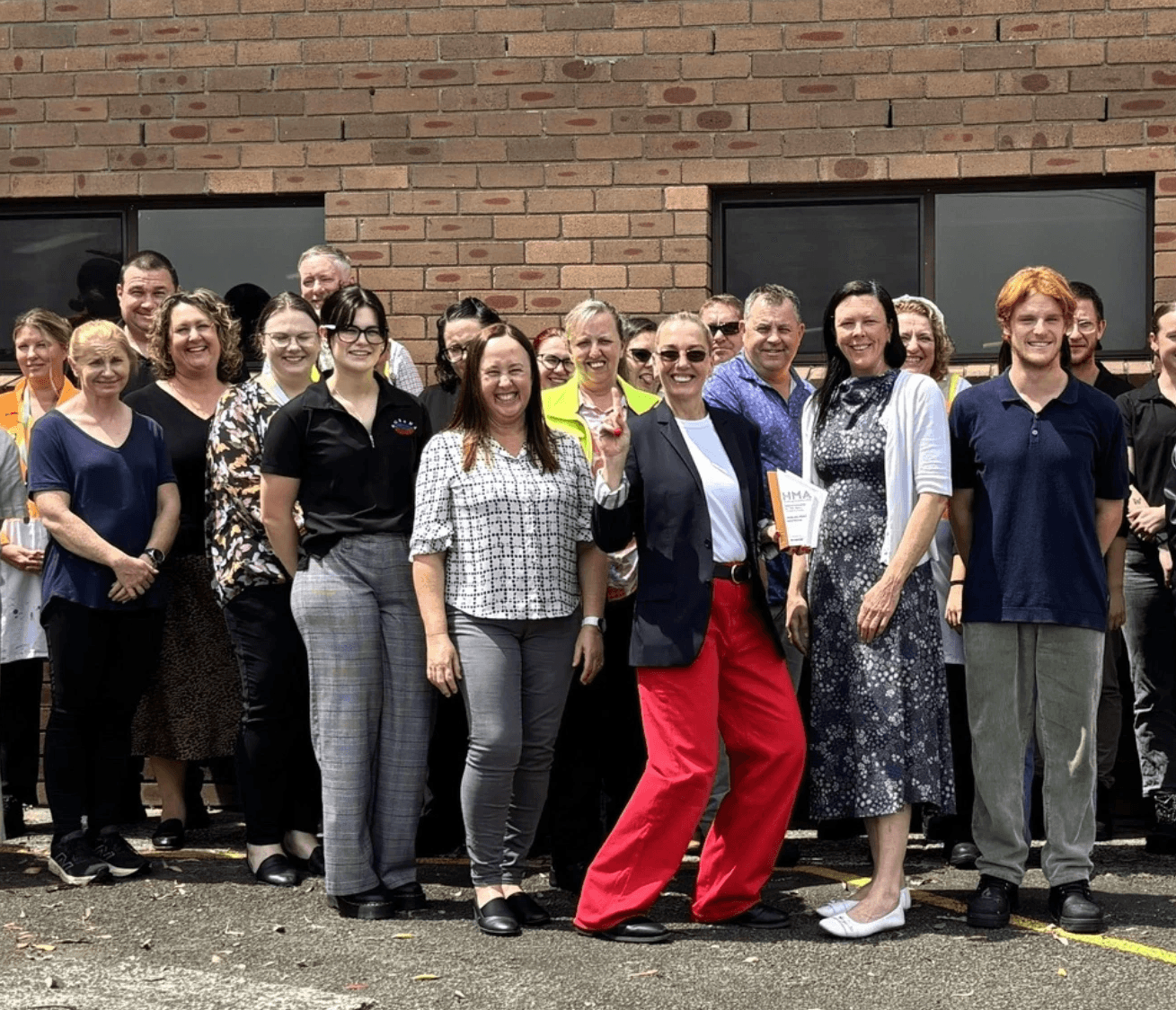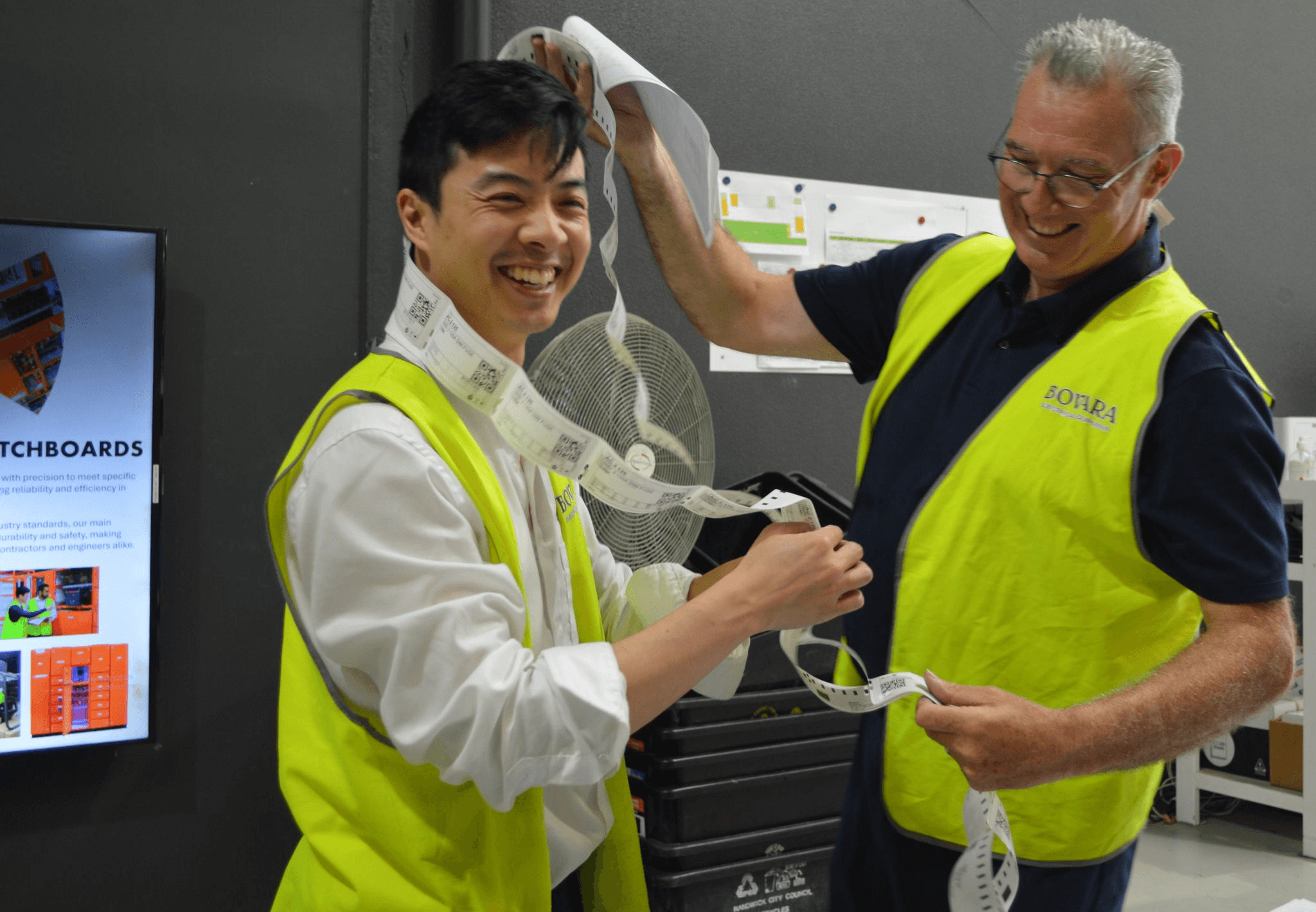

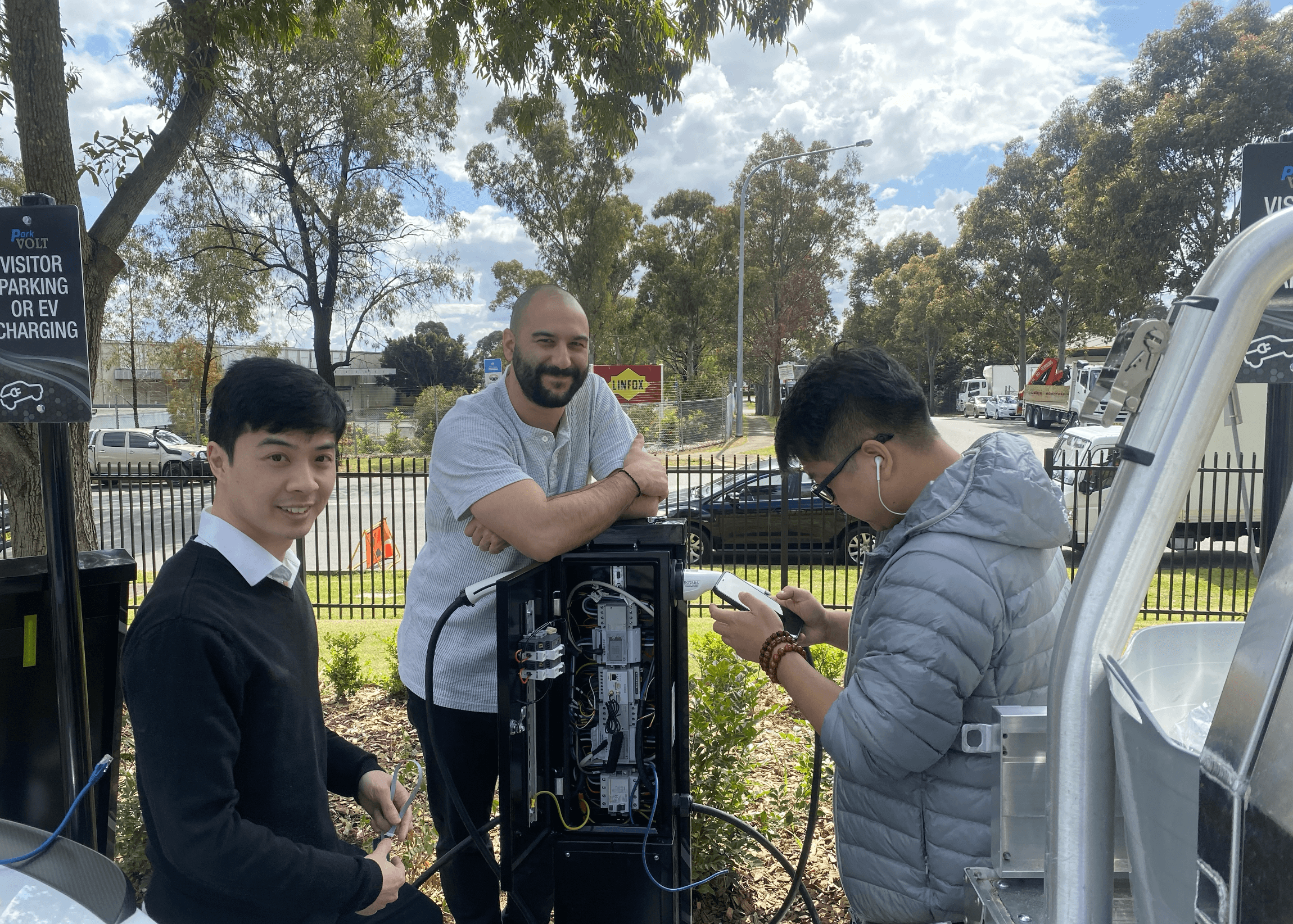
No engineering team. No platform. A hard deadline. We supplied the full build capability — 30 EV charging locations deployed inside business parks.
Industry
Manufacturing
Company size
50 - 200 Employees
About
Bovara is a leading Australian-owned manufacturer and designer of electrical equipment, switchboards, and enclosures. Operating for over 30 years with headquarters in Sydney (Huntingwood, NSW) and facilities in Victoria, they serve the commercial, industrial, and renewable energy sectors.
"The reason this worked is Halcrow didn't try to build everything custom. They found the right balance: proven open-source for the hard infrastructure problems, custom development for the consumer experience. That's what got us to market in 5 months instead of 18."

30 locations
Charging stations deployed within business parks
4 weeks
Hardware validation time vs. 3-6 months if Bovara sourced independently
We've been inside enough initiatives to know where the value actually is and where businesses waste on technology.
Book Your Diagnostic Call
The Situation
Bovara is an Australian electrical manufacturing company that had spent decades distributing electrical components—EFTPOS terminals, power supplies, industrial controls. By 2023, they'd identified an opportunity bigger than component distribution: Australia's EV charging infrastructure market.
The market timing was right. EV adoption was accelerating. Government incentives were flowing. But charging infrastructure lagged—range anxiety was still a legitimate concern for potential EV buyers. Bovara saw the gap: if they could build a complete charging platform—hardware + software—they'd enter the market as an integrated services provider, not just a hardware distributor.
The ambition:
Deploy physical charging stations across Australia
Build a consumer-facing mobile app for drivers (locate stations, start sessions, monitor charging progress)
Operate the entire network as a service (recurring revenue model, not one-time hardware sales)
The problem: Bovara knew hardware (they'd been sourcing and distributing electrical components for years). They didn't know software, especially the kind of software that talks to physical devices in real-time across distributed infrastructure.
Specific technical challenges:
Hardware Supply Chain: Charging stations need controller units—the electronic component that manages power delivery and communicates with the network. These controllers must follow industry communication standards (OCPP - Open Charge Point Protocol) so they can send charging data to a central system. Bovara didn't have a reliable supply chain for OCPP-compliant controllers. Local sourcing was difficult. Without compatible hardware, the software couldn't be built or tested properly.
Software-Hardware Integration: The mobile app needed to communicate with charging stations scattered across Australia, process real-time session data, handle payment processing, and keep drivers updated on charging progress. Bovara had zero in-house expertise building systems that connect software to physical devices at scale.
User Experience Edge Cases: Early prototypes revealed a critical flaw: charging progress updates relied on push notifications. When users disabled notifications (common behavior), the app stopped displaying charging updates entirely. Drivers couldn't see their charging progress without manually reopening the session. For an EV charging app, that made the product unreliable.
Timeline pressure: If Bovara didn't launch by November 2023, they'd miss the summer EV travel season (December-February in Australia). Missing that window meant waiting another 6-9 months to get traction. The market was moving—competitors weren't waiting.
Key Result Metric (KMR): Launch working EV charging platform within 6 months, achieve >95% charging session reliability, enable real-time charging progress tracking independent of notification settings.
Why they called us
Bovara could have hired a traditional software agency: "build us an EV charging app." Most would have quoted 12-18 months and started designing from first principles. That timeline didn't work—they needed to launch in 5-6 months.
Bovara called Halcrow because they'd learned something critical from watching competitors struggle: the fastest way to launch isn't building everything custom. It's knowing what to build custom and what to leverage from existing infrastructure.
The specific ask wasn't "design an EV charging system." It was:
Solve the hardware supply problem: Find OCPP-compliant charging station controllers that work reliably, can be sourced at scale, and integrate with standard backend systems.
Accelerate software development: Don't rebuild charging management infrastructure from scratch—use proven open-source foundations where they exist, focus custom development on the consumer-facing layer (mobile app, user experience).
Fix the notification dependency issue: Real-time charging updates can't break when users disable notifications. This was a structural UX problem, not a feature request.
Why Halcrow specifically: We'd worked with Bovara before on adjacent hardware-software projects. They knew we understood the difference between "building a custom system" (slow, expensive, high risk) and "assembling a platform from proven components with custom layers where it matters" (fast, cost-effective, de-risked).
Law 10 (Avoid Multi-Front Wars): Bovara wisely didn't try to build everything simultaneously. Get hardware supply locked in first. Use open-source charging management core. Focus custom development on consumer app and user experience. Fight one battle at a time.
How we worked
Halcrow provided a cross-functional team embedded directly in Bovara's product development:
Team structure:
1 hardware sourcing specialist (supply chain, OCPP standards, controller compatibility)
2 backend engineers (charging management system, payment integration, session handling)
2 mobile developers (iOS + Android native apps)
1 DevOps engineer (cloud infrastructure, monitoring, real-time data streaming)
Critical embedding elements:
Direct access to hardware suppliers: We leveraged existing relationships with charging controller manufacturers. No "request for quote" theatre—we knew which suppliers could deliver OCPP-compliant units at scale.
Shared technical infrastructure: Bovara gave us direct AWS access, payment gateway credentials, app store accounts. No "submit a ticket to deploy." We moved at the speed decisions could be made, not the speed bureaucracy allowed.
Law 3 (Direct Infrastructure Access): We weren't integrating via formal APIs at arm's length. We worked inside Bovara's technical infrastructure. When something needed testing with real hardware, we had charging controllers on-site for immediate validation.
Build Structure: Layered Development with Proven Foundations
Phase 1: Hardware Foundation (Month 1 - June 2023)
Objective: Lock in hardware supply, validate OCPP compatibility.
Problem: Charging stations are commodity hardware in markets like the US and EU. In Australia in 2023, local supply was immature. Most manufacturers were overseas. Lead times were long. Quality was inconsistent.
Solution: Leveraged existing supplier relationships to identify manufacturers with:
OCPP 1.6 compliance (industry standard protocol for charging station communication)
Proven track record deploying in Australia/New Zealand
Reasonable lead times (8-12 weeks, not 6+ months)
Responsive support (when hardware fails in the field, you need fast replacements)
Result: Secured supplier agreement by end of June. First batch of 20 charging controllers ordered. Hardware de-risked before writing a single line of code.
Law 9 (Incremental Exposure Reduction): We didn't order 200 controllers upfront. First batch: 20 units. Validate in pilot deployment. Then scale. If hardware failed, we're out $15K, not $150K.
Phase 2: Software Foundation (Months 2-3 - July-August 2023)
Objective: Working backend charging management system, mobile app prototype.
Critical architectural decision: Don't build charging management from scratch.
Charging management systems handle:
Station connectivity (track which stations are online/offline)
Session management (start/stop charging, track energy delivered)
Payment processing (pre-authorization, final billing)
Load balancing (distribute power across multiple chargers at same location)
Fault handling (what happens when station loses power mid-session?)
This is solved infrastructure. Open-source projects like STEVE (OCPP server) and Open Charge Map already handle this. Rebuilding from scratch would take 6-9 months and introduce risk.
Our approach:
Deployed open-source OCPP server (handles station communication, session management)
Built custom API layer on top (consumer-facing endpoints for mobile app)
Focused custom development on: user authentication, payment integration (Stripe), mobile app UI/UX
Time saved: At least 2 months. We didn't spend July-August building charging session logic. We spent it building the consumer experience layer while the open-source foundation handled the hard infrastructure problems.
Law 10 (Avoid Multi-Front Wars): Don't fight the "build a charging management system" war and the "build a great mobile app" war simultaneously. Use proven infrastructure for the first, focus energy on the second.
Phase 3: Mobile App Development (Months 2-4 - July-September 2023)
Objective: iOS and Android apps that drivers actually use.
Core features:
Station map (find nearby chargers)
Session start (tap to begin charging)
Real-time progress (see charging status, energy delivered, estimated completion time)
Payment (pre-authorize card, charge when session completes)
History (past charging sessions, invoices)
The notification dependency problem emerged in August:
Early beta testers disabled push notifications (common privacy behavior). When they did, charging progress updates stopped displaying. The app relied on push notifications to wake up and fetch new data. No notifications = no updates = terrible UX.
Root cause: Mobile operating systems (iOS/Android) aggressively suspend background processes to save battery. Apps can't continuously poll for updates in the background. Most developers solve this with push notifications—server sends notification, OS wakes app, app fetches new data.
But if users disable notifications (which many do), this pattern breaks completely.
Fix: Decoupled charging updates from push notifications.
Implemented gRPC streaming—a real-time communication protocol where the server can push data to the client without relying on OS notification infrastructure. When the app is open, it maintains an active connection to the server. Server pushes charging progress updates directly. No notification dependency.
Result: Charging progress updates work reliably whether notifications are enabled or not. User can open app anytime during charging session and see real-time status.
Phase 4: Pilot Deployment (Month 5 - October 2023)
Objective: Deploy 10 charging stations in Sydney metro, test with real drivers.
Pilot location strategy:
3 stations at shopping centers (high-dwell-time locations—people shop for 1-2 hours, perfect charging window)
4 stations at workplace parking (commuters charge during work day)
3 stations at apartment complexes (overnight charging for residents)
What we learned from pilot:
Session start latency: Some stations took 8-12 seconds to respond to "start charging" command. Felt slow. Root cause: OCPP message queue backlog when multiple cars tried to start simultaneously. Fixed by implementing connection pooling and load balancing.
Payment pre-authorization: Users expected to know max charge upfront. We pre-authorized $50 on their card, charged actual amount when session ended. Clear communication in app: "We'll hold $50, you'll only be charged for what you use."
Charging interruptions: If station lost power or network connection mid-session, session ended abruptly with no user notification. Implemented "graceful termination" logic—if session ends unexpectedly, app notifies user, still charges for energy delivered up to that point.
Phase 5: Public Launch (November 2023)
Objective: Expand from 10 pilot stations to 30+ stations across Sydney, Melbourne, Brisbane.
By November, the platform was stable:
Hardware supply chain validated (controllers worked reliably, supplier could scale)
Backend infrastructure proven (open-source OCPP server handled hundreds of sessions without issues)
Mobile app refined (real-time updates worked, payment flow clear, session management intuitive)
WHAT CHANGED
Platform Performance (December 2023):
Charging stations deployed: 30 locations (Sydney, Melbourne, Brisbane)
Mobile app downloads: 850+ in first 30 days
Charging sessions completed: 320+ in first 30 days
Session success rate: 97% (target >95%)
Average session duration: 45 minutes
Average energy delivered: 28 kWh per session
Development Speed:
Time to market: 5 months (vs. 12-18 months typical for custom build)
Time saved via open-source: 2+ months minimum
Hardware validation time: 4 weeks (vs. 3-6 months if Bovara sourced independently)
User Experience:
Charging progress updates: 100% reliable regardless of notification settings
Payment pre-authorization: Clear communication eliminated user confusion
Session start latency: <3 seconds (after connection pooling optimisation)
Qualitative Shifts
Before (June 2023): "We see the opportunity in EV charging, but we don't have the software expertise to build this ourselves. If we partner with the wrong agency, we'll spend 18 months building something that doesn't work."
After (December 2023): "We're live with 30 stations. The platform works. Drivers are using it. We can scale this nationally without rebuilding the core infrastructure."
WHY THIS WORKED
Most greenfield projects either:
Over-engineer: Build everything custom, launch delayed 12+ months
Under-engineer: Rush to market with fragile system that breaks under load
Bovara avoided both because of strategic component selection:
Law 10 (Avoid Multi-Front Wars): Don't fight every battle. Charging session management is solved infrastructure—use open-source. Consumer mobile experience is differentiation—build custom. Hardware supply is a sourcing problem—leverage existing relationships. Focus energy where it creates actual competitive advantage.
Law 9 (Incremental Exposure Reduction): First batch: 20 controllers. Pilot: 10 stations. Validate each layer before scaling. If hardware failed, we're out $15K. If software crashed during pilot, only 10 stations affected, not 100.
Law 6 (Challenge Assumptions): The notification dependency issue came from accepting mobile platform constraints as immutable. "Push notifications are how apps get real-time updates" is true 95% of the time. For EV charging, where users actively want to monitor progress, gRPC streaming was better. Challenging the assumption unlocked the right solution.
what you're buying
If you're entering a new market with tight timelines and your competitive advantage comes from assembling the right components quickly rather than building everything from scratch, you're not buying "custom development." You're buying strategic architecture decisions that compress time-to-market.
Bovara didn't need the world's most custom charging management system. They needed a working platform by November 2023. The strategic choice—open-source core, custom consumer layer—made that possible.
You're not buying our time. You're buying strategic decisions that eliminate 6-12 months of unnecessary custom development. Ready to compress your time-to-market? Contact Sam Halcrow on 0431197004 or sam@halcrow.com.au
—
Case study written May 2026. Bovara and Parkvolt are real. OCPP (Open Charge Point Protocol) is the industry standard. All data sourced from project retrospectives and launch metrics. Timeline and outcomes verified by client stakeholders.
See how other teams are winning with Halcrow

Sprint variance at 45%. No scrum master. Offshore team not delivering. We deployed a product manager and delivery lead — embedded — and got them to 14% variance in 90 days.
Metric #1
Metric #1 description
Read more