
Eight Years Alongside Australia's Leading Pet Insurer
Industry
Insurance
Company size
1 - 10 Employees
About
Bow Wow Meow is a multi-award-winning Australian pet insurance provider established in 1995 and underwritten by PetSure. It offers highly customizable policies, letting you choose your own reimbursement rates, annual benefit limits, and excess options to suit your budget and your pet’s specific needs.
“They did not come in with a big redesign pitch. They came in with a system for continuous improvement, and the results compounded.”

8-10
AB tests per quarter up from zero.
90%
Reduction in time-to-change and operational risk elimination.
We've been inside enough initiatives to know where the value actually is and where businesses waste on technology.
Book Your Diagnostic Call
The Situation
Bow Wow Meow is one of Australia's most recognised pet insurance brands. They insure hundreds of thousands of cats and dogs. Their website receives 10,000's visitors per month. Their brand reputation in the pet space is strong — breed-specific products, deep vet-industry relationships, a genuine claim to being pet-first in a category that often isn't.
But by 2021, the technology organisation surrounding that brand was fragile. The marketing website — the primary acquisition engine for new policies — was built on WordPress, hosted on Azure, and maintained by a rotating cast of vendors who each understood their slice of the stack but not the whole system. Halcrow managed application engineering. Bow Wow Meow's IT Partner managed infrastructure. Bow Wow Meow's internal marketing team owned content. No single party had accountability for the system working end-to-end.
The result was predictable: changes that should take days took weeks. A/B testing didn't exist — not because nobody wanted it, but because standing up the capability required coordinating three separate organisations, none of whom were on the hook for the outcome. The website had 80,000 monthly visitors and a 14% quote-to-buy conversion rate, but nobody knew with confidence whether that rate was going up, down, or what was causing it to move.
The specific structural problems:
No A/B testing capability meant every hypothesis about the site — cover clarity, plan selector UX, social proof placement — was guesswork. In a conversion-rate business, this is expensive guesswork.
Three-vendor architecture meant no single party owned the outcome. Application issues bounced between Halcrow and their IT partner. Content changes waited on availability across teams. Speed died in approval.
Technical debt had accumulated quietly. PHP version compatibility issues. Plugin vulnerabilities. Monitoring gaps. Nobody's job to find them proactively.
Strategic planning happened annually, not continuously. Bow Wow Meow's leadership wanted to increase policy sales, reduce MRR churn, and grow customer lifetime value — but there was no operating rhythm that connected those goals to weekly technical decisions.
Why they called us
They didn't call Halcrow because their website was broken. They called us because their website was working — and they had no idea how much faster it could work.
Kelvin Kenney (CEO, Economic Buyer) understood the problem structurally. The fragmented vendor model wasn't designed badly — it had grown organically over years as the business scaled. Each vendor was competent within their lane. The problem was the space between the lanes. Nobody sat in the middle with accountability for the outcome.
What they'd seen fail:
Annual strategy cycles that produced roadmaps nobody could execute because the technical architecture for rapid iteration didn't exist
Decisions about website changes that required consensus across three vendors before anything could be tested
The best ideas — A/B tests, UX improvements, conversion experiments — dying in scoping discussions rather than shipping
The question they were actually asking: Can someone sit inside this system, understand all three layers (infrastructure, application, business), and make it move? That's not a project question. It's an operating model question.
Law 9: The constraint is usually organisational, not technical.
How we worked
Embedded System: Operating Inside Three Layers
We didn't replace any of the existing vendors. We embedded ourselves as the connective tissue — the party who understood Halcrow’s application concerns, ITMD's infrastructure constraints, and Bow Wow Meow's business objectives simultaneously.
Direct access without gatekeeping
Shared Slack channels across all three parties. Direct access to the WordPress admin, Azure portal, and Google Analytics. No ticket queues to request information. When something needed investigating, we investigated it.
Co-located work rituals
Fortnightly ops check-ins between Halcrow and ITMD. Monthly service reviews with Bow Wow Meow. Weekly sprints with prioritised conversion initiatives. The cadence wasn't imposed — it emerged from the question "what's the minimum coordination needed to keep things moving?"
Decision-making structure
We operated with pre-agreed authority on testing and optimisation decisions. Bow Wow Meow approved the strategic direction. We executed without re-seeking approval for each individual experiment. Law 3: Speed dies in approval.
Continuous deployment
WordPress changes deployed through Git-based CI/CD. Infrastructure changes following a staged change management process. The principle: nothing stayed in staging longer than it needed to.
Transparent visibility
Monthly service reviews documented performance, availability, and initiative outcomes. Not status-update theater — actual data. Quote volume trends. Conversion rate movements. Infrastructure health metrics.
Knowledge transfer built in
The RACI matrix for the three-vendor system wasn't just governance documentation. It was the knowledge transfer mechanism — explicit about who owns what so that internal capability at Bow Wow Meow grew over time, not shrunk.
What this required technically:
WordPress templating system rebuilt for consistency — single-source content blocks reusable across pages, eliminating the problem of 40+ pages with divergent copy
DORA metrics implementation — deployment frequency, lead time for changes, change failure rate, mean time to recovery. Not for the sake of measurement. Because you can't improve what you don't see.
Monitoring expanded beyond uptime to functional health — forms working, API integrations active, synthetic transaction monitoring covering the quote-to-buy flow
The AI-assisted engineering shift (2025):
With stable infrastructure and systematic testing processes in place, the focus shifted to AI-assisted development. Pages that previously required full engineering sprints could be prototyped in a day. Content that required coordinating a brief, a copywriter, and a developer could be drafted, tested, and iterated within the same week.
This wasn't AI replacing the team. It was AI compressing the distance between idea and live test — which is precisely what the Halcrow model is built to exploit.
WHAT CHANGED
(2021) | After (2026) | Change
A/B tests per quarter | 0 | 8-12 | ∞ → systematic
Time to deploy a test | 6-8 weeks | 5 days | ~85% reduction
CTR on tested pages | Baseline | +35% first test | Compounding
Incident response (P1) | Unstructured | <2 hours to notification | Defined SLAs
Security vulnerability scanning | Ad hoc | Quarterly + triggered | Systematic
Monthly reporting | None | Full service review | Operational visibility
Backup testing | Irregular | Quarterly schedule | Verified
WHY THIS WORKED
The Three-Vendor Problem
Most organisations solving for a fragmented vendor stack do one of two things: (1) consolidate to a single vendor who owns everything, or (2) add more governance to coordinate the existing vendors.
Both approaches miss the structural cause. The problem isn't the number of vendors. It's that accountability for outcomes sits nowhere. Each vendor is accountable for their deliverables. Nobody is accountable for the site converting.
We inserted accountability for outcomes into the system without displacing any of the existing vendors. Halcrow still owns application engineering. ITMD still owns infrastructure. Halcrow owns the outcome — the conversion rate, the uptime, the velocity of iteration.
Law 2: Consultants sell deliverables. The outcome is someone else's problem. We structured this engagement the opposite way.
The Compound Effect of Proximity
Five years of embedded proximity produces something that a project-based engagement never can: compound learning about a specific business. We know that Bow Wow Meow's customers are often first-time pet owners who don't fully understand how insurance works. We know the breed selector is a genuine differentiator but isn't prominent enough in the acquisition funnel. We know that the quote form converts better when claims transparency is shown earlier. We know which plugins are high-risk and which are stable.
That knowledge didn't come from a discovery phase. It came from five years of operating inside the system and watching what happens.
Law 6: You can't document your way to the right outcome. No amount of handover documentation would transfer this — it lives in the ongoing relationship.
The Laws in Practice
Law 1 (Distance is the enemy of speed): Three-vendor distance collapsed through embedded coordination, not vendor consolidation.
Law 3 (Speed dies in approval): Pre-agreed authority for testing decisions eliminated approval loops for individual experiments.
Law 5 (Earlier beats perfect): Small tests deployed fast, learnings applied immediately, rather than large changes deployed after months of planning.
Law 8 (Activity is not progress): Annual roadmap planning replaced by continuous experimentation. DORA metrics measure what moves, not what gets done.
Law 9 (The constraint is usually organisational, not technical): The website was technically capable of A/B testing from day one. The constraint was the coordination overhead required to run a test across three vendors. We fixed the coordination, not the technology.
The Pattern This Reveals
High-traffic acquisition sites don't fail from bad technology. They fail from slow learning.
Bow Wow Meow had 10,000’s monthly visitors and didn't know whether a page change would help or hurt conversion — not because they lacked analytics, but because the cost of running a test was too high to run tests regularly.
Any business with a website that converts visitors into customers faces this problem. The gap between "we should test this" and "we tested this and learned from it" is almost never a technology gap. It's a structural gap: who owns the outcome, who can make decisions without approval, who is accountable when the test doesn't ship.
The embedded proximity model solves for this directly. When your technology partner is accountable for your conversion rate, not for their deliverables, the incentive is to run more tests faster — not to deliver more features on a longer timeline.
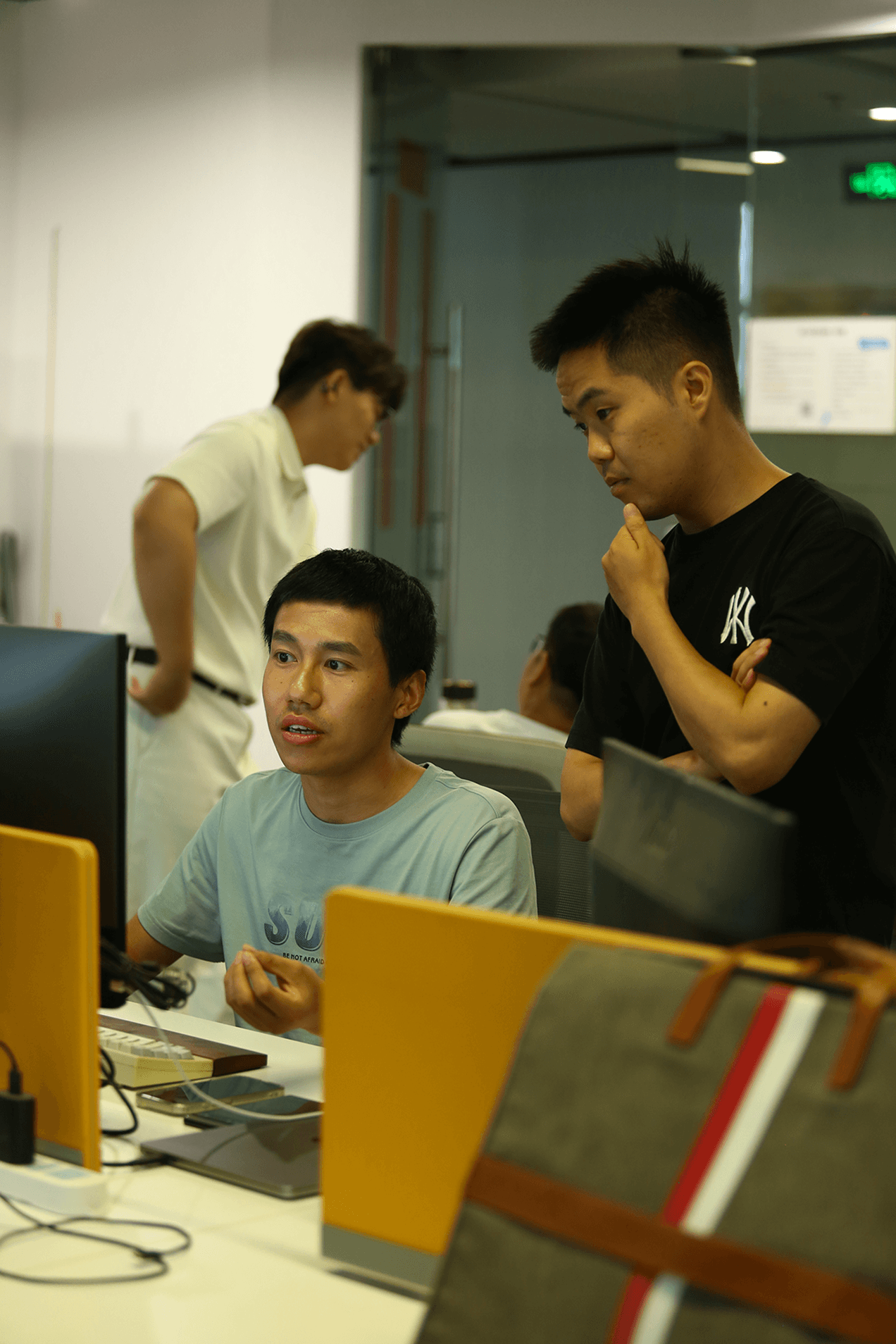
what you're buying
If your website generates leads or policy sales, and you're not running at least one conversion experiment per week, you're leaving compounding returns on the table.
What makes this different: Traditional agencies run projects. We run experiments. You don't pay us to redesign your website. You pay us to improve your conversion rate — and the bonus structure makes clear that if the rate doesn't move, we don't get paid in full.
You're not buying our time. You're buying continuous conversion improvement at operating cost. Ready to find out how much faster your acquisition engine can move? Book a 20-minute call with Sam Halcrow on 0431197004 or sam@halcrow.com.au.
Case study written May 2026. Bow Wow Meow Pet Insurance is a real client. All data sourced from website analytics, service review records, and sprint retrospectives. Engagement is ongoing.
See how other teams are winning with Halcrow

Rebuilding Infrastructure for a Multi-National Snow Trip Specialist
Metric #1
Metric #1 description
Read more