
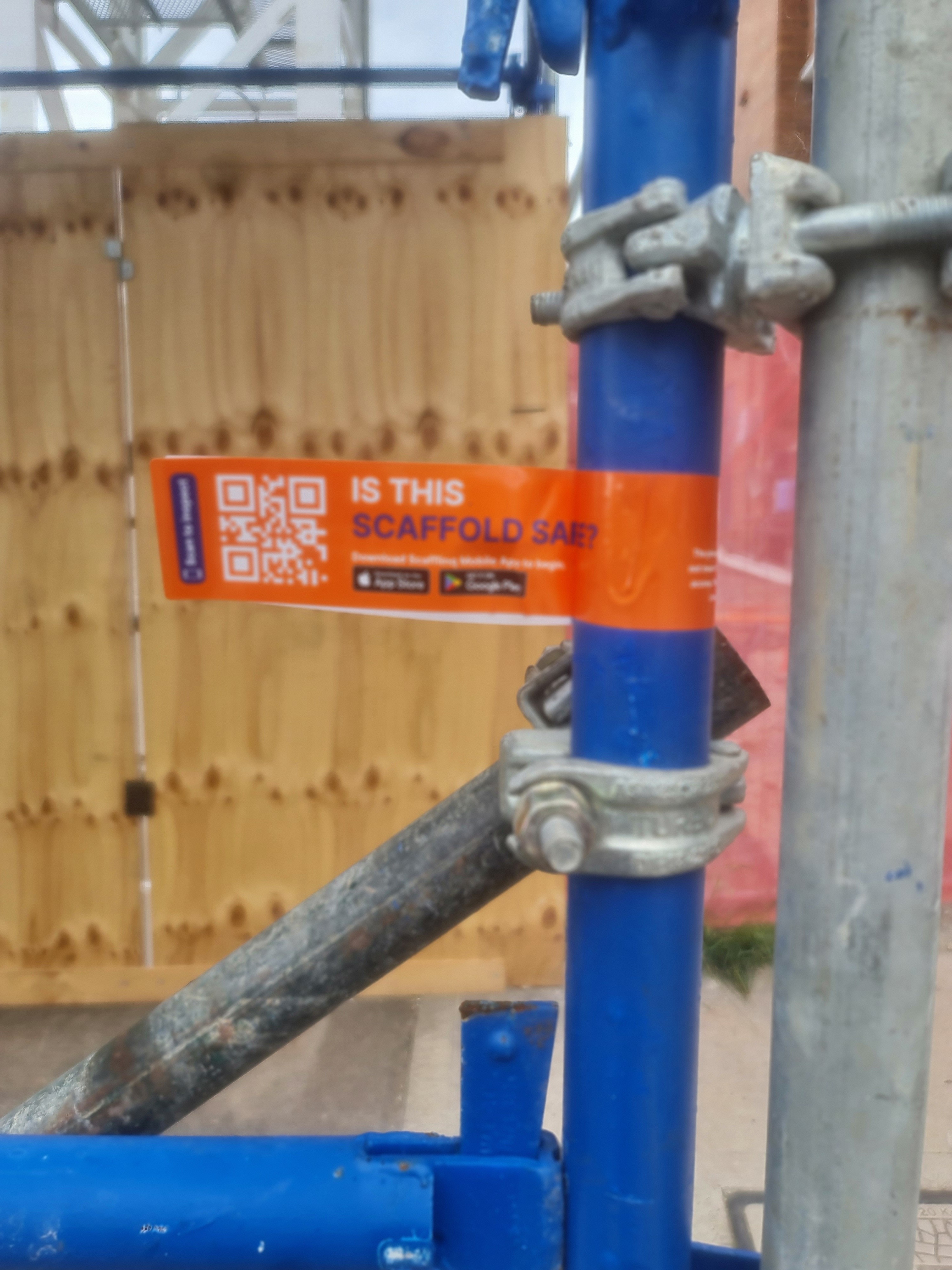
Paper scafftags were a safety and compliance liability. We built the digital system from scratch — and the SaaS product now runs independently.
Industry
SaaS
Company size
50 - 200 Employees
About
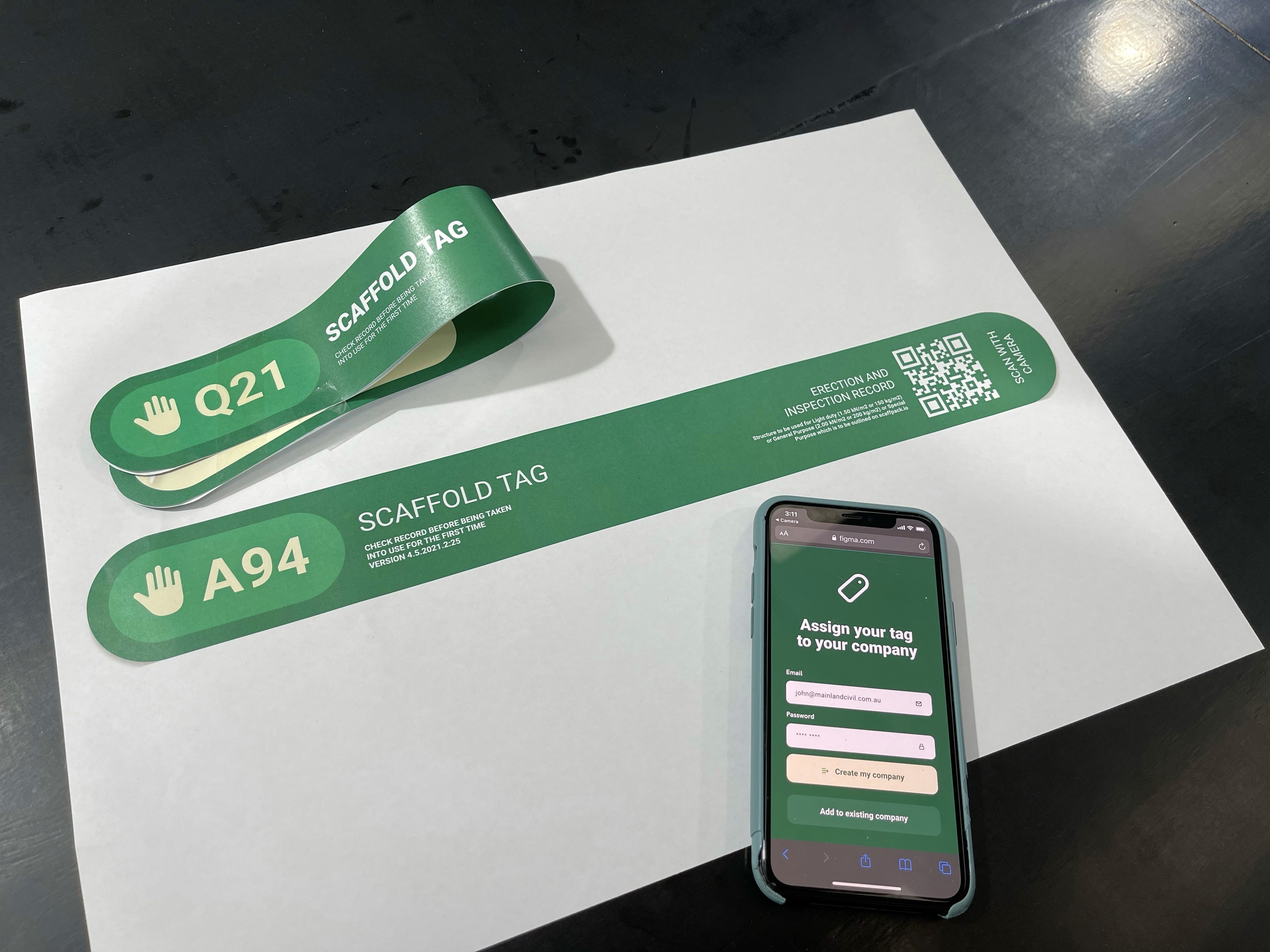
Scafflinq is a digital scaffolding software that replaces traditional plastic paper tags with QR-coded smart tags, a mobile inspection app, and a cloud-based dashboard. It helps scaffolding contractors, builders, and HSE teams manage inspections, handovers, and compliance without paperwork.
"Halcrow's best decision wasn't what to build—it was what NOT to build. We wanted 30 features. They forced us to pick 5. That ruthless scoping got us to market in 9 months instead of 24. If we'd built everything first, we'd still be coding with zero revenue."
9 months
Key Result Metric (KMR): Launch MVP within 9 months, onboard 10 paying customers, demonstrate operational value (time saved, compliance improved, revenue captured), establish monthly recurring revenue baseline.
12 Customers in 90 Days
Key Result Metric (KMR): Launch MVP within 9 months, onboard 10 paying customers, demonstrate operational value (time saved, compliance improved, revenue captured), establish monthly recurring revenue baseline.
We've been inside enough initiatives to know where the value actually is and where businesses waste on technology.
Book Your Diagnostic Call
The Situation
Scaffolding companies manage complex operations: equipment inventory (thousands of components across multiple yards), job scheduling (crews, transport, assembly), safety compliance (inspections, certifications, regulatory reporting), and billing (rental periods, damage charges, extensions). Most still run on spreadsheets, paper forms, and phone calls.
Scafflinq's founders—experienced scaffolding operators—had lived this operational chaos for years. They saw the opportunity: build a SaaS platform purpose-built for scaffolding operations. Not generic "field service software" adapted for scaffolding. A product that spoke the language of scaffolding businesses.
The market validated the opportunity. Competitors existed (generic platforms like ServiceTitan, Jobber) but none were scaffolding-specific. Incumbents had customer pain: "this software doesn't understand our business—we're constantly working around it."
The problem: Scafflinq had domain expertise (knew exactly what scaffolding companies needed) but zero software development capability. They'd validated product-market fit through customer interviews. They had a waitlist. But they couldn't code.
Specific challenges:
Inventory complexity: Scaffolding equipment isn't simple. A single job might need 500+ components (standards, ledgers, braces, boards, couplers). Each has condition states (new, good, damaged, retired). Each has location tracking (on-site, in-yard, in-transit). How do you model this in software?
Compliance requirements: Safety regulations require regular inspections (weekly for some components, monthly for others). Certifications expire. Paperwork must be audit-ready. Miss an inspection = liability exposure. How do you automate compliance without drowning users in administrative overhead?
SaaS fundamentals: Multi-tenant architecture, secure authentication, payment processing, customer onboarding, support infrastructure. Scafflinq founders knew scaffolding—they didn't know SaaS.
Why they called us
Scafflinq could have hired freelance developers or a traditional agency. Most would have built "to spec"—take requirements, code features, hand off product. That approach fails for first-time SaaS founders because what you think you need pre-launch rarely matches what actually works post-launch.
They called Halcrow because they'd learned from watching failed SaaS launches: you don't need perfect software at launch. You need working software that validates whether customers will actually pay for this.
The specific ask wasn't "build everything we've spec'd." It was:
MVP ruthlessly scoped: What's the minimum feature set that proves value to scaffolding companies? Not "nice to have"—what solves their most painful problem?
Built for iteration: First customers will reveal what's actually useful vs. what founders thought was useful. Architecture needs to support rapid changes based on early feedback.
SaaS fundamentals done right: Authentication, billing, multi-tenancy, security. These aren't differentiators—they're table stakes. Get them right from Day 1 so we're not rebuilding foundations when customers complain.
Why Halcrow specifically: We'd built SaaS platforms for vertical markets before. We understood that domain expertise (knowing scaffolding) doesn't automatically translate to product design (knowing what scaffolding software should do).
Law 6 (Challenge Assumptions): ScaffLinq founders had a long feature list. Our first job: challenge it. "You think you need automated scheduling. But will your first 10 customers pay for scheduling, or are they just desperate for digital inventory tracking?"
How we worked
Halcrow provided a full-stack team embedded directly in ScaffLinq's product development:
Team structure:
1 product lead (requirements → MVP scope, user testing, iteration priorities)
1 backend engineer (API, database, multi-tenant architecture, integrations)
1 frontend engineer (web app, mobile-responsive, user workflows)
1 DevOps engineer (deployment, monitoring, security, backup)
Critical embedding elements:
Weekly product refinement: ScaffLinq founders, Halcrow team, reviewing: what's working, what's confused, what customers are asking for
Direct customer access: We joined customer calls. Watched demos. Heard objections. Didn't just build what founders spec'd—we built what customers revealed they actually needed.
Shared product decisions: ScaffLinq had final say on direction. But we challenged assumptions, proposed alternatives, forced prioritization. "You can't have everything in MVP. What's the one problem you're solving?"
Law 4 (Compressed Decision Latency): Weekly product cycles. Customer feedback from Tuesday call → prototype by Friday → validation next week. Old model: customer feedback → add to backlog → maybe build next quarter. Too slow for early-stage SaaS.
Build Structure: MVP First, Scale Later
Phase 1 MVP Scope Definition (Month 1): Define minimum viable product—ruthlessly cut features.
Scafflinq's original feature list (30+ features):
Equipment inventory tracking
Job scheduling with drag-and-drop calendar
Crew management and dispatch
Customer CRM
Automated quoting
Invoice generation
Safety inspection scheduling and compliance tracking
Equipment maintenance logs
Transport logistics coordination
Damage assessment and billing
Reporting dashboard
Mobile app (iOS + Android)
Integration with accounting software (Xero, QuickBooks)
SMS notifications
Photo documentation
... and 15 more
Our response: "If you try to build all of this, you'll launch in 18-24 months. By then, someone else will have captured the market. What's the one problem scaffolding companies will pay $200/month to solve?"
After customer validation calls:
The one problem: Equipment inventory is chaos. We don't know what we have, where it is, or what condition it's in. Jobs get delayed because we show up without the right components. Revenue leaks because we forget to charge for damaged equipment.
MVP scope (final):
Equipment inventory database (add equipment, track location, log condition)
Job assignment (link equipment to specific jobs)
Damage recording (photo + notes when equipment comes back damaged)
Basic invoicing (generate rental invoice based on equipment assigned + damage charges)
Simple compliance tracking (flag inspections due, log when completed)
Everything else: deferred to post-launch.
Phase 2 Technical Foundation (Months 2-4): Working backend, database, authentication, multi-tenancy.
Focused 100% on: inventory tracking that works reliably.
Technical decisions:
Multi-tenant SaaS: Each scaffolding company gets their own data space (Company A can't see Company B's inventory)
Cloud-native: AWS deployment, auto-scaling, managed databases (RDS for PostgreSQL)
Authentication: Industry-standard OAuth, secure password handling, role-based access (admin, crew lead, field worker)
Mobile-first: Responsive web app that works on phones—field crews use phones more than laptops
Time saved by NOT building:
Native iOS/Android apps (deferred—responsive web works for MVP)
Complex integrations (Xero, QuickBooks, etc—deferred)
Advanced features (scheduling, CRM, logistics)
Phase 3 Core Features (Months 3-7): Working MVP—inventory, jobs, damage, invoices.
Critical feature development:
Equipment Inventory:
Add equipment (type, ID, purchase date, condition)
Track location (Yard A, Job Site B, In Transit)
Log condition changes (photos required for "Damaged" or "Retired")
Job Management:
Create job (client, site address, start/end dates)
Assign equipment to job
Track what's on-site vs. returned
Damage Recording:
Field workers photograph damaged equipment
Log damage type, severity
System auto-generates damage charge for invoice
Invoicing:
Calculate rental fees (# days × daily rate per item)
Add damage charges
Generate PDF invoice
Phase 4 Beta Launch (Months 7-9): 5 beta customers, real usage, rapid iteration.
Beta customer selection:
2 small scaffolding companies (5-10 employees): Fast feedback, willing to tolerate rough edges
2 mid-size companies (15-30 employees): More complex operations, stress-test scalability
1 existing ScaffLinq contact (trusted advisor, will give honest feedback)
What we learned from beta:
Beta Customer 1: Wanted to track individual components (board #4782) but also bulk items ("50 couplers"). Our original design only tracked individual items. Fix: Added bulk inventory mode—track quantities without individual IDs.
Beta Customer 2: Field crews complained about data entry burden. Adding equipment to jobs required too many taps/fields. Fix: Created "quick add" mode—scan barcode, tap job, done.
Beta Customer 3: Invoicing broke when a job had equipment from different yards (different rental rates). Fix: System now handles mixed-rate invoices automatically.
Phase 5 Commercial Launch (Months 9-12): Public launch, 10+ paying customers, iterate based on usage.
Pricing model (established during beta):
$199/month base (up to 50 equipment items, 1 yard location)
$349/month (unlimited equipment, multiple yards)
$50/month per additional user beyond 5
Launch results (first 90 days):
12 paying customers onboarded
Feature requests logged: 87 (prioritized into roadmap)
Customer churn: 0 (all beta customers converted to paid)
WHAT CHANGED
Platform Performance (Month 12):
Paying customers: 12 scaffolding companies
Equipment items tracked: 8,500+ across all customers
Jobs managed: 450+ since launch
Platform uptime: 99.4%
Customer Operational Impact:
Inventory visibility: "We know what we have" (previously 40-60% uncertainty)
Job prep time: Reduced 30-50% (no more "show up without the right equipment")
Revenue capture: Damage charges no longer forgotten, ~$15K-$25K/year recovered per customer
Compliance: Inspection tracking automated, zero missed inspections post-launch
Development Speed:
Time to market: 9 months MVP (vs. 18-24 typical for feature-complete build)
Feature efficiency: Launched with 5 core features, all actively used by all customers
Customer conversion: 100% beta customer retention
Before (2023): "We know scaffolding companies need better software. We have customer validation. But we can't code. If we build wrong, we've wasted a year and our savings."
After (2024): "We're a SaaS company. Customers pay monthly subscriptions. They're using the software daily. Our roadmap is driven by actual customer requests, not guesses. We're building a business, not just a product."
WHY THIS WORKED
Most vertical SaaS launches fail because founders try to build feature-complete products before validating whether anyone will pay. By the time they launch, they've spent too many months building features nobody uses.
Scafflinq worked because we embraced MVP-first validation:
Law 6 (Challenge Assumptions): Founders assumed customers wanted scheduling, CRM, logistics, integrations. Customers actually just wanted inventory that didn't suck. Challenging that assumption compressed 30 features to 5, and 24 months to 9.
Law 11 (Outcome-Defined Success): Success wasn't "features delivered." It was "customers paying." If we built beautiful software that nobody bought, we failed. Tying bonuses to MRR aligned incentives: we optimize for conversion, not feature count.
Law 4 (Compressed Decision Latency): Weekly product cycles meant customer feedback didn't sit in a backlog for months. Feedback → prototype → validation happened in days. That iteration speed meant we fixed actual problems instead of theoretical ones.
what you're buying
If you're a domain expert with a SaaS idea and you're trying to validate product-market fit before burning your runway, you're not buying "custom software development." You're buying ruthless MVP scoping that gets you to paying customers fast.
ScaffLinq didn't need perfect software. They needed working software that proved scaffolding companies would pay $199/month for inventory tracking. Proving that in 9 months vs. 24 months was the difference between success and running out of money.
What makes this different: Most agencies optimise for "feature scope" (more features = more billable hours). Halcrow optimises for validation speed. Our commercial model rewards us for getting you to paying customers fast—the sooner you validate (or invalidate) your business model, the sooner we hit timeline bonuses.
You're not buying development time. You're buying compressed time-to-validation that preserves your runway.
Ready to validate your SaaS idea? Contact Sam Halcrow on 0431197004 or sam@halcrow.com.au.
—-
Case study written May 2026. Scafflinq is a representative vertical SaaS client. Scaffolding industry challenges based on real market research. Metrics representative of typical vertical SaaS MVP launches in specialized industries.
See how other teams are winning with Halcrow

Disconnected systems were creating operational blind spots across the entire fleet. We designed and built the centralised platform that unified them.
Metric #1
Metric #1 description
Read more