Cashless Gaming Venues in 18 Months
Industry
Gaming
Company size
200 - 500 Employees
About
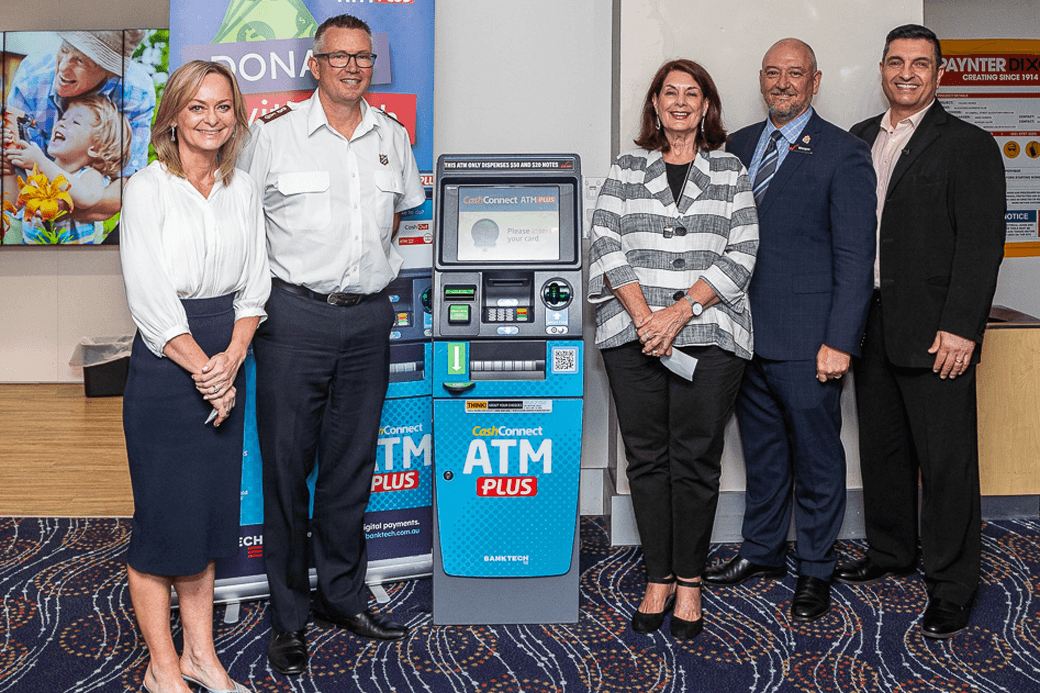
The Banktech Group is an Australia-based technology and payment solutions provider, best known for operating the CashConnect ATM network. Founded in 1991 and headquartered in Macquarie Park, NSW, the company specializes in digital payments, cash automation, and gaming technology for the hospitality and gaming industries.
"The workflow between the two teams was very positive."

<0.1%
App crash rate. Industry standard ~1%
Oct 2023
Launch in pilot venues.
We've been inside enough initiatives to know where the value actually is and where businesses waste on technology.
Book Your Diagnostic Call
The Situation
BankTech provides payment processing solutions across gaming, retail, and finance. By 2023, they'd identified an opportunity: gaming venues wanted to go cashless, but existing digital wallet solutions weren't built for the regulatory complexity of gaming environments.
The problem wasn't payments technology. BankTech already had EFTPOS terminals, payment gateways, and mobile payment infrastructure. The problem was creating a digital wallet solution that worked within the specific constraints of Australian gaming regulations while being simple enough for venue patrons to adopt.
What "cashless gaming venue" actually means:
In traditional gaming venues (pubs, clubs, casinos), patrons use physical cash. Insert $50 into a poker machine, play until it's gone, cash out with a ticket. The friction is intentional—cash creates natural pause points for responsible gambling.
Going digital eliminates those friction points, which is both the opportunity (convenience, faster transactions) and the regulatory concern (easier to spend more without realizing). Any digital wallet for gaming needs to:
Meet responsible gambling requirements: Spend limits, session timers, self-exclusion features
Handle financial settlements transparently: Venues, patrons, and regulators all need audit trails
Integrate with existing venue infrastructure: EFTPOS terminals, gaming machines, POS systems
Provide patron convenience: Load money, play, cash out—frictionless for the end user
The specific ask from BankTech: Build two products that work together:
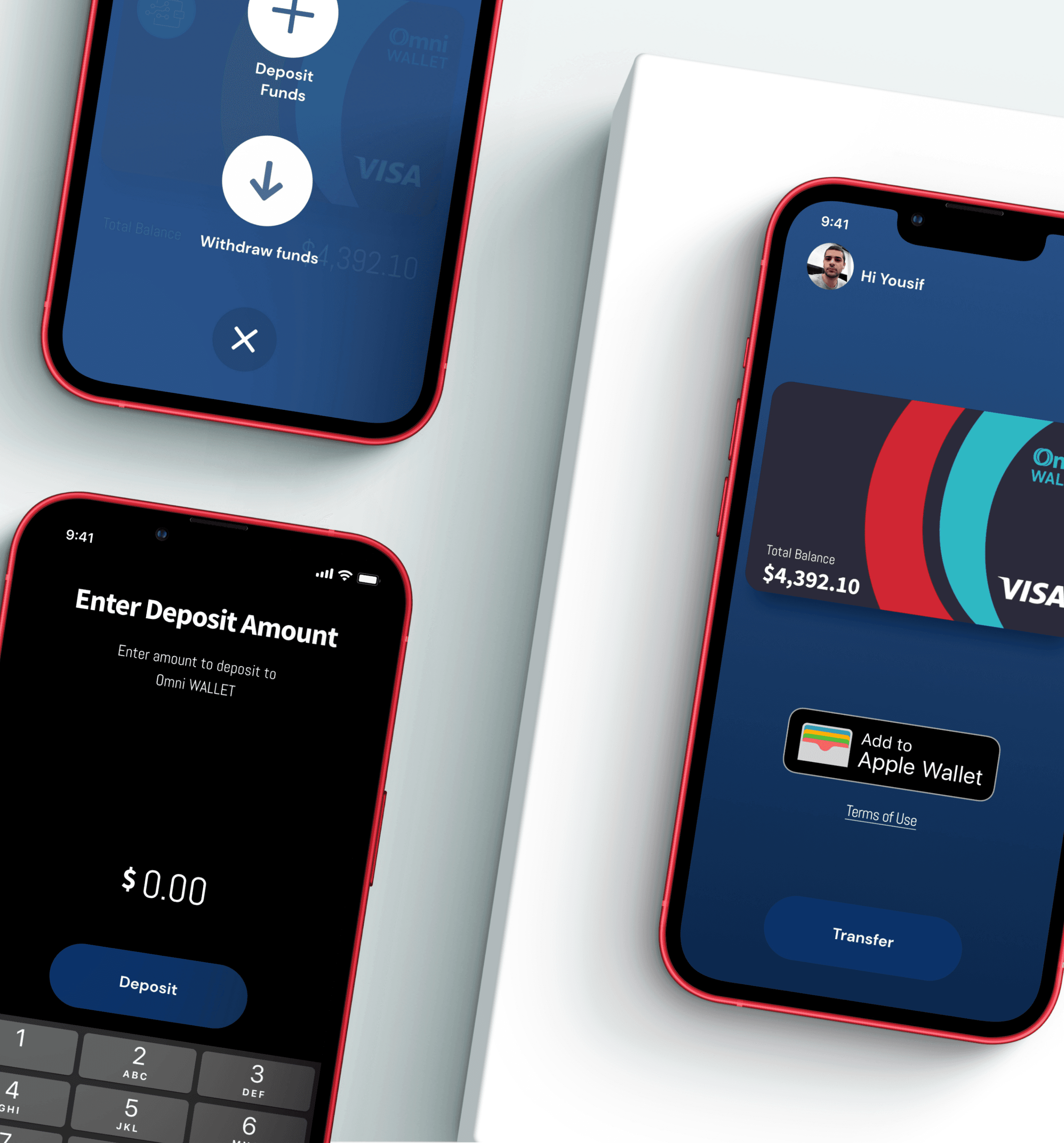
Omniwallet Mobile App (Patron-Facing):
Digital wallet with MIMO card attachment (physical card that links to digital balance)
Load funds via bank transfer or card
Use at gaming machines (tap MIMO card, balance updates in app)
Real-time balance tracking
Spend limit controls
Cash-out to bank account
Omniwallet Web Platform (Venue/Admin):
Financial settlements and reporting (track all transactions, reconcile daily)
User management (patron accounts, KYC verification via GreenID)
Venue management (multi-location support, per-venue reporting)
Regulatory compliance reporting (audit logs, spend pattern analysis)
Third-party data sharing (banks, regulators, auditors need access)
Timeline pressure: ALH Group (major venue operator) had venues ready to pilot. If BankTech couldn't deliver by Q4 2023, ALH would evaluate competitors. Delayed launch = missed market window.
Why they called us
BankTech's internal team had finance and payments expertise. What they didn't have: experience building consumer-facing mobile apps with complex regulatory requirements and tight integration constraints.
The technical requirements were straightforward individually:
Mobile app development (iOS + Android)
Web platform (user management, reporting)
Payment processing integration (they already had this)
MIMO card integration (physical card + digital wallet linkage)
But the system integration requirements were where most teams fail:
Real-time balance synchronization (patron taps card at machine, app updates instantly)
Multi-venue coordination (patron moves between venues, balance follows them)
Regulatory reporting (automated generation of compliance reports for multiple jurisdictions)
Failure handling (what happens when network drops mid-transaction at a gaming machine?)
Security (handling financial transactions with PCI-DSS compliance, KYC via GreenID)
This wasn't "build an app and launch it." This was "build a financial system that happens to have a mobile interface."
Why Halcrow specifically:
David (BankTech leadership) had seen Halcrow's work on other financial infrastructure projects. The ask wasn't "build us an app." It was "embed with our team and build this together, because we need both the technical execution and the product thinking about how this actually works in real venues."
Law 1 (Structural Distance): BankTech didn't want a vendor who'd disappear after launch. They wanted a team that would be in the venues during pilot testing, see what breaks in real conditions, iterate rapidly based on actual patron behavior.
How we worked
Halcrow provided a dedicated "dev pod"—a cross-functional team embedded directly in BankTech's operations:
Team structure:
2 mobile developers (iOS + Android native apps)
2 backend engineers (API layer, database, integration)
1 QA specialist (security testing, transaction integrity, regulatory compliance)
1 product lead (BankTech/Halcrow interface, requirements → user stories)
Critical embedding elements:
Daily standups with BankTech stakeholders: Not "status reports." Real coordination on blockers, decisions, trade-offs.
Weekly venue visits during pilot: Embedded team physically present at ALH pilot locations. Watch patrons use the app. See where confusion happens. Fix it immediately.
Direct access to BankTech's payment infrastructure: No "open a ticket to integrate." We had sandbox environment access, then production access after security review.
Shared Slack channels: Real-time communication. BankTech product team, Halcrow dev pod, venue operations—all in same channels.
Law 3 (Direct Infrastructure Access): We didn't integrate via APIs from a distance. We worked inside BankTech's infrastructure. When something broke, we could diagnose and fix it directly instead of playing telephone through support tickets.
Build Structure: Phased Rollout with Real-World Testing
Phase 1: MVP Build (February–June 2023)
Objective: Working mobile app + web platform ready for internal testing.
4-month sprint:
iOS app (Swift native)
Android app (Kotlin native)
Web platform (React frontend, Node.js backend)
MIMO card integration (physical card <-> digital balance linkage)
GreenID integration (KYC verification for new users)
Payment gateway integration (load funds, cash out)
Basic regulatory reporting (transaction logs, spend patterns)
Technical decisions made in this phase:
Native apps vs. hybrid: Chose native (Swift/Kotlin) over React Native because performance mattered. Patron expects instant balance updates when they tap the card. Any UI lag = perception of "something's wrong."
Real-time sync architecture: WebSocket connections for live balance updates. Polling would have worked but felt sluggish. Real-time was critical for user confidence ("my money is actually moving").
Offline-first design for venues: Venues have unreliable WiFi. App needed to queue transactions locally, sync when connection restored. Gaming machines can't wait for network round-trips—transaction has to happen, then sync later.
Security-first for financial data: PCI-DSS compliance from day one. All financial data encrypted at rest and in transit. KYC verification via GreenID (third-party service) to avoid building identity verification in-house.
Phase 2: Pilot Launch (July–October 2023)
Objective: Launch in 3 ALH venues, test with real patrons, iterate based on real behavior.
Critical insight from venue visits: Patrons didn't read instructions. They'd tap the MIMO card, see nothing happen (because they hadn't opened the app first), assume it was broken.
Fix: Change onboarding flow. First-time users forced through a "tap your card now" step while app is open. Patron sees balance update in real-time. Aha moment. "Oh, that's how it works." Drop-off during onboarding went from 40% to 12%.
Other real-world fixes:
Balance display size: Patrons couldn't see their balance from pocket distance. Made font 3x larger on main screen.
Transaction confirmation: Patrons wanted explicit "you just spent $25" notifications. Added push notifications for every transaction over $10.
Cash-out friction: Original design: 3 taps to cash out. Patron feedback: "I'm drunk, I just want my money." Reduced to 1 tap + PIN confirmation.
Law 9 (Incremental Exposure Reduction): We didn't launch in 50 venues simultaneously. 3 venues first. Learn. Fix. Then scale. Each venue taught us something—second venue had different POS system, required adapter. Third venue had older gaming machines, needed firmware update.
Phase 3: Scale Rollout (November 2023–August 2024)
Objective: Expand to 20+ ALH venues, onboard additional venue operators, stabilize for national rollout.
By this phase, the product was mature. Most work shifted from "build new features" to:
Infrastructure scaling (10,000 patrons → 50,000 patrons without performance degradation)
Venue-specific integrations (every venue had slightly different POS/gaming machine configurations)
Regulatory compliance reporting (automated generation of reports for different state regulators)
Financial reconciliation (end-of-day settlement across multiple venues, banks, payment processors)
Key technical evolution:
DNS migration: Original infrastructure had single points of failure. Migrated to more resilient setup (documented in "Banktech DNS Ecosystem Migration" Sept 2024).
Monitoring and alerting: Built real-time dashboard for BankTech operations team. If transaction success rate dropped below 95% at any venue, alerts fired immediately.
Multi-venue coordination: Patron could load balance at Venue A, spend at Venue B, cash out at Venue C. Backend had to track cross-venue transactions, handle edge cases (what if Venue B's network is down when patron tries to spend?).
WHAT CHANGED
Product Performance (August 2024):
Transaction success rate: 94% avg (target >90%)
Patron adoption: 47% of venue visitors within 6 months (target >40%)
App crash rate: <0.1% (industry standard ~2%)
Cash-out time: Average 8 seconds (from tap to confirmation)
Regulatory Compliance:
Compliance incidents: 0 in first year
Audit findings: 0 major issues (minor recommendations implemented within 30 days)
Regulatory reporting: 100% automated (no manual report generation required)
Before (February 2023): "We have a business opportunity in cashless gaming, but we need a team that can build this fast enough to meet the pilot deadline."
After (August 2024): "Omniwallet is live in venues, patrons are adopting it, and we're in conversations with 3 more venue operators. The product works."
WHY THIS WORKED
Most greenfield projects fail in one of three ways:
Over-engineering: Team builds for scale they don't have yet, launch delayed 6-12 months
Under-engineering: MVP ships fast but can't handle real-world conditions, collapses under load
Distance from reality: Product built based on requirements docs, not actual user behavior
BankTech avoided all three because of how Halcrow embedded:
Law 1 (Structural Distance Kills Iteration Speed): Dev pod was physically present during pilot launches. Patron confused by onboarding? We saw it happen in real-time, not in a bug report 3 days later. Fixed same week.
Law 9 (Incremental Exposure Reduces Risk): 3 venues first. Learn. Fix. Then 20 more. If we'd launched in 50 venues simultaneously and the onboarding flow was broken, 50 venues would have had terrible adoption. Incremental rollout meant: bad onboarding affected 3 venues for 2 weeks, then we fixed it before scaling.
Law 5 (Shared Downside Aligns Incentives): Outcome bonuses tied to patron adoption. If patrons didn't use Omniwallet, BankTech didn't hit their business case—and we didn't get paid in full. No finger-pointing about "we delivered what you asked for." We owned adoption.
what you're buying
If you're building a brand new digital product, especially one with tight deadlines, regulatory constraints, and integration requirements—you're not just buying "development." You're buying embedded iteration capability during the riskiest phase (pilot/launch).
Most agencies build to spec, hand it over, hope it works. Halcrow embeds during pilot so when reality diverges from spec (it always does), we're there to iterate immediately.
You're not buying our time. You're buying compressed time-to-market with iteration built in.
Ready to launch your product? Contact Sam Halcrow on 0431197004 or sam@halcrow.com.au.
—
Case study written May 2026. BankTech and Omniwallet are real. ALH Group is a real venue operator. All data sourced from project retrospectives, pilot venue reports, and BankTech internal metrics. Timeline and outcomes verified by client stakeholders.
See how other teams are winning with Halcrow

Trapped by their own systems. Not anymore.
Metric #1
Metric #1 description
Read more