
Disconnected systems were creating operational blind spots across the entire fleet. We designed and built the centralised platform that unified them.
Industry
Freight & Logistics
Company size
50 - 200 Employees
About
Founded in 2005 and headquartered in Sydney, Wiseway Logistics is a leading global freight forwarding and third-party logistics (3PL) provider. They specialize in cross-border trade between Australia/New Zealand, the Asia-Pacific, and the United States, offering end-to-end supply chain management for general and perishable goods.
“Halcrow didn’t just replace a spreadsheet. They embedded with our dispatch team, rode with drivers, and built around the real operational constraint: the driver–coordinator communication loop. The result was a platform our team actually wanted to use, with an audit trail we can trust down to GPS and timestamps."
Key Result
A purpose-built platform replacing Google Sheets for dispatch coordination, with a companion driver app replacing phone calls — and an immutable audit trail for every job.
We've been inside enough initiatives to know where the value actually is and where businesses waste on technology.
Book Your Diagnostic Call
The Situation
Wiseway Logistics is an ASX-listed courier and freight company operating across Australia. At the scale Wiseway operated, dispatch and driver coordination was still running substantially on Google Sheets — shared spreadsheets that multiple coordinators edited simultaneously, tracking jobs, drivers, and deliveries in real time.
Google Sheets worked until it didn't. At growth stage, the problems compounded:
Multiple coordinators editing the same document created version conflicts and data loss
No mobile-native interface for drivers — they were calling dispatch or accessing spreadsheets on phones not designed for it
No single source of truth for job status: dispatch had a view, drivers had a different view, management had whatever was last exported
No audit trail: when a delivery was disputed, there was no timestamped record of assignment, pickup, and delivery
The specific moment that crystallised the decision to build: a disputed delivery where no reliable record existed of when the job was assigned, when the driver picked up, or what the delivery confirmation was. The spreadsheet had been edited after the fact. The dispute cost Wiseway a commercial relationship.
Why they called us
Wiseway had looked at off-the-shelf logistics platforms. The platforms that existed were built for freight companies with fixed routes and warehouse operations — not for the courier/on-demand delivery model Wiseway ran. The closest fit required significant configuration that would have taken longer than building something purpose-fit.
The question they were actually asking: can you build something that works the way we actually work, not the way a logistics platform assumes we work?
What every previous attempt had missed:
As the Notion document captured: "every previous attempt kept the builders at arm's length from the actual operation. Nobody was close enough to understand that the real constraint wasn't dispatch — it was the driver communication loop."
Dispatch knew what jobs needed doing. Drivers knew what they were actually doing. The gap between those two realities — the communication loop between dispatch and drivers in motion — was where orders went wrong.
Law 1: Distance is the enemy of speed. An embedded team that rode with drivers, sat in the dispatch centre, and observed the real communication breakdown built something different from what a team that gathered requirements in a meeting room would have built.
How we worked
Week one: Halcrow team in the Wiseway dispatch centre. Observing. Listening to radio calls. Watching coordinators manage the spreadsheet during peak delivery windows.
What we found: the spreadsheet wasn't the problem. The communication breakdown between a coordinator making a decision and a driver acting on it was the problem. The spreadsheet was a symptom of a communication model, not the cause of it.
The design insight that changed the product:
Most dispatch platforms are designed around the job — create a job, assign it, track it. The coordinator's view is the primary view.
Wiseway's coordinators spent more time communicating with drivers than managing jobs. The driver-coordinator communication loop — "what's your ETA on job 47?", "I've just picked up at the depot", "that address doesn't exist, what do I do?" — was the operational heartbeat.
We designed the driver app around that communication loop, not around job management. The job management was a downstream record. The communication was the product.

WHAT CHANGED
Driver mobile app:
Job assignment notification: driver receives new job with full details, one-tap acceptance
Navigation integration: job address opens in maps automatically
Status updates: pickup confirmed, en route, delivered — each with GPS timestamp
Exception reporting: address issues, customer unavailable, access problems — reported in-app, visible to dispatch immediately
Chat: direct message to coordinator without leaving the app
Day summary: driver's completed jobs, earnings, and performance metrics
Web application (dispatch and coordination):
Live dispatch board: all active jobs, all active drivers, status in real-time
Job creation and assignment: drag-and-drop job assignment to driver
Communication hub: all driver messages in one view, by driver and by job
Audit trail: every status change timestamped and immutable — created, assigned, accepted, picked up, delivered, with GPS coordinates at each step
Exception management: flagged exceptions requiring coordinator action surfaced prominently
Management view: job completion rates, driver performance, exception frequency by type
The audit trail architecture:
Every event in the system — job created, assigned, accepted, picked up, delivered, any exception — written to an immutable log with timestamp and GPS. The dispute that had cost Wiseway a commercial relationship before the platform existed: with the new system, that dispute would have been resolved in 90 seconds by pulling the job's event log.
WHY THIS WORKED
The Communication Loop Discovery
The most important insight from embedding in the operation: the real constraint wasn't the spreadsheet. It was the communication gap between coordinators and drivers in motion.
Traditional dispatch platforms solve for job management. Wiseway's coordinators didn't need better job management. They needed a faster, more reliable communication loop with drivers who were moving, navigating, and handling exceptions simultaneously.
We built the communication layer as the primary interface — jobs as records, communication as the product. That inversion produced a tool coordinators and drivers actually preferred over the spreadsheet, rather than a system they were forced to use.
Law 9: The constraint is usually organisational, not technical. Google Sheets wasn't the problem. The communication model that Google Sheets was failing to support was the problem. Building the right system required understanding that distinction.
The Earned Visibility Insight
The driver earnings display — not in scope, discovered in week-three prototype testing — became one of the most-used features in the app. Drivers who could see their earnings accumulating throughout the day completed more deliveries and reported higher job satisfaction.
This is what embedding inside the operation produces: insights that don't come from a requirements workshop. They come from showing real users a real product and watching what they reach for.
The Pattern This Reveals
Every logistics company running on spreadsheets has already decided it needs a platform. The question is whether the platform gets built for how operations actually work or how someone imagined they work.
The difference between an embedded build and an arms-length build isn't technical capability. It's proximity to the operational reality. Teams that build logistics platforms from a meeting room produce platforms that coordinators find exhausting to use. Teams that build from inside the dispatch centre produce platforms that coordinators prefer.
The investment in embedding isn't overhead. It's the mechanism that produces adoption.
what you're buying
Ready to replace your spreadsheets with something built for how you actually work? Contact Sam Halcrow on 0431197004 or sam@halcrow.com.au.
See how other teams are winning with Halcrow
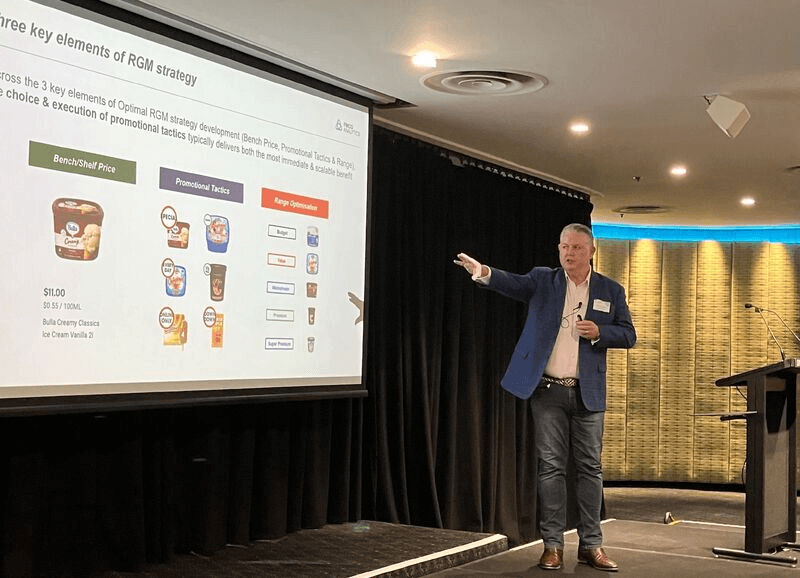

FMCG Analytics partnered with Halcrow to build the Unimpacted Baseline platform
Metric #1
Metric #1 description
Read more