Delivery without outcomes
Your projects ship. Nothing changes.

Sam Halcrow, Founder
Updated: Tuesday 15th June '26
From the desk of Sam Halcrow, CEO of Halcrow
Everything was real: the timelines, the budget, the effort. And yet the business is in almost exactly the same place it was twelve months ago. The operations team is still doing things manually. The data is still unreliable. The system that was supposed to solve the problem is being quietly worked around by the people it was built for. You've run the retrospectives. You've heard the reasons: scope creep, resourcing constraints, competing priorities, a vendor who overpromised. Every explanation is technically true. None of them explain why it keeps happening.



















If that sentence lands — keep reading. Because the issue almost certainly isn't what you've been told it is. Projects that deliver activity without outcomes almost always have the same underlying cause. And it's not the technology, the vendor, or the team.
THE REAL DIAGNOSIS
The problem isn't your technology. It's the distance.
When a project delivers something technically correct that nobody actually uses, that's a distance problem. When a system goes live and the team immediately builds workarounds — distance problem. When the project closes and the outcome doesn't follow — distance problem. Distance between the builders and the business problem they're supposed to be solving. Distance between the delivery team and the people who actually do the work. Distance between what was agreed in the planning session and what the people building it understood. Most technology engagements are structured in ways that make this distance inevitable. An external team is briefed, goes away, and returns with a product. A vendor account manager manages the relationship while a delivery team three steps removed does the work. An internal IT team builds something the business unit didn't meaningfully contribute to designing. The distance is baked in. The outcome failure is just what happens next. This is why post-mortems are always technically accurate but never fix anything. They describe what went wrong on the surface. They never identify the structural condition that made it almost certain to go wrong in the first place.
WHAT ACTUALLY FIXES IT
The organisations that broke this pattern didn't find better technology. They closed the distance.
Between the builders and the business problem. Between the people doing the work and the people who understand the outcome they're chasing. It's not a philosophical position but an operational one. It changes how a team is structured, where they sit, who they talk to, and what "done" means before a single line of code is written. We've been doing this for sixteen years across more than 250 mid-market organisations. The pattern of why technology engagements produce activity without outcomes is well understood by now. So is the pattern of what fixes it. The question isn't whether it's fixable — it almost always is. The question is whether you can see clearly enough from inside the situation to identify exactly what needs to change.
OUR RESULTS





More brand experience



















TESTIMONIALS

Tim Buric
Chief Technology Officer, Agilyx and MUNIvers




Arun Prasad, Founder AIWhispr

Luke Schwigtenberg, Head of R&D Banktech

Rouad El-Ayoubi, CEO Alliance Project Group

Angela Bevitt-Parr, CMO AWS Australia

Kelvin Kenney, CEO Bow Wow Meow

Adrian Black, Founder Ticked Off

Tim Buric, CTO Agilyx

Thomas Roper, Engineer Lendlease

Andrew Raso, Group-CEO Online Marketing Gurus

Matthew Freebury, Director FMCG Analytics

Michael Soukie, Founder Scafflinq

George Betsis, Founder Stickytape

Michael Kalucy, Managing Director Workhouse

Malaz Majanni, CEO OnePath Network

Anastasia Lobanova, SAP Analyst Agrana Fruit

Trent Carney, Founder MyCanary





Why not look at this together?
Building internally or with a development agency without structures, systems and skills in place burns your cash and delivers mediocrity at best.
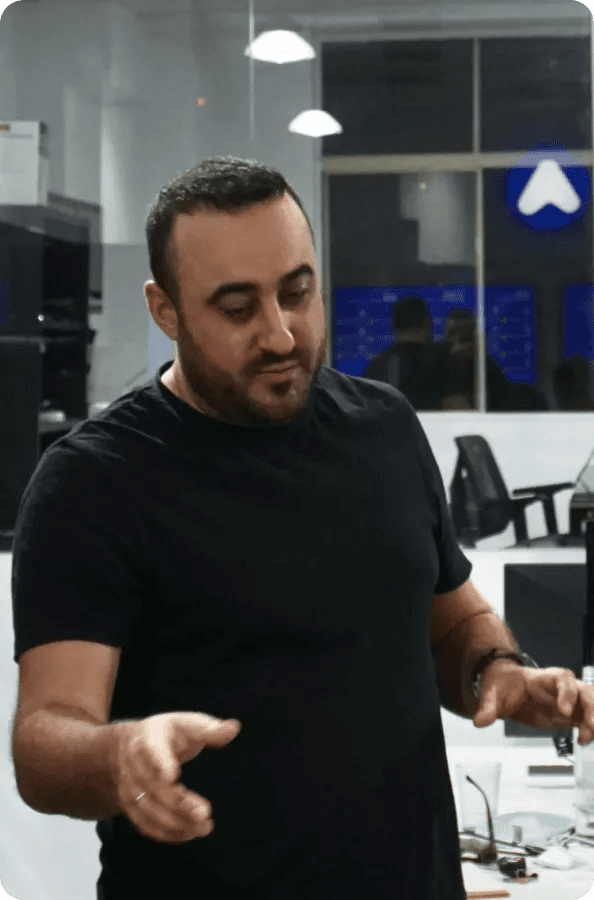
What I offer instead is a straightforward, no-pressure conversation. I listen to how things actually move through your workflows and team, and tell you plainly which systems, skills or structures are missing or wrong.
If it makes sense to go deeper, we can talk about what getting these in place looks like.
If it doesn't, you'll still walk away knowing more than you did before having our chat.
FAQ
Questions we get asked
How is this different from a consultancy or an agency?
We don't have engineers. Can you supply the whole team?
We already have engineers. Why would we bring in more people?
How quickly can you start?
What kinds of organisations do you work with?
What does it cost to get started?
What kinds of expertise can you actually deploy?
If the pattern is real, the free diagnostic with us is the right first move.
250+
Organisations and teams we've worked in
Est. 2010
We've been helping with software development
245 years
Combined years building software like yours
Book a call with Sam