Visibility & control
You're running the business on gut feel. Because the data can't be trusted.

Sam Halcrow, Founder
Updated: Tuesday 15th June '26
From the desk of Sam Halcrow, CEO of Halcrow
The dashboards exist. The reports get generated. But when you need to make a significant decision, you find yourself asking someone to manually check the numbers — because the last time you relied on them, they were wrong. And the time before that. At some point you stopped trusting the system and started trusting the person who knows how to work around it. The board presentation where you gave a range instead of a number. The pricing decision that took three weeks because someone had to reconcile four different sources. The operational problem you didn't catch until it was expensive, because the metric that would have flagged it wasn't being measured reliably. The cost of bad data is rarely one catastrophic decision. It's the compound cost of every decision made more slowly, more cautiously, or more expensively than it needed to be.



















Most organisations with unreliable data have already tried to fix it: new BI tools, a data warehouse project, a reporting overhaul. Sometimes these fix the immediate symptom — the particular report that was wrong. Without fixing the underlying condition that keeps producing unreliable data in the first place. That's why point-in-time fixes don't hold. The structure that produces bad data keeps producing it, regardless of how many times individual reports are corrected.
THE REAL DIAGNOSIS
It's a structural problem in how decisions and data are connected.
The underlying condition is almost always the same. Data enters the business through multiple points, often inconsistently. Systems that were supposed to integrate don't — or integrate in ways that were correct once and have since drifted. And the people responsible for data quality are too far from the decisions that depend on it to understand what "trustworthy" actually means in practice. Data flows in through multiple entry points with no consistent governing logic. Integrations that worked at lower volumes have drifted or broken without anyone noticing. The people responsible for data quality don't sit close enough to the decisions that depend on it. The output gets fixed repeatedly without anyone touching the input conditions that produce it. The data that flows out of a system is only as reliable as the structures governing how it goes in. Most organisations fix the output. The input conditions keep producing the same result.
WHAT ACTUALLY FIXES IT
The organisations that turned this around rarely needed to replace their technology stack.
What they needed was a clear picture of where the structural problems actually sat. Which integrations were unreliable. Which data entry points were producing noise. Which governance processes were absent. And a sequenced plan for addressing them in the right order. That plan is almost always simpler than the organisation expects because it's targeting root causes rather than symptoms. A small number of structural fixes typically produces a disproportionate improvement in data trustworthiness across the whole business. The path from "we can't trust what we're looking at" to "we can make decisions with confidence" is rarely as long or as expensive as it feels from inside the problem.
OUR RESULTS





More brand experience



















TESTIMONIALS

Tim Buric
Chief Technology Officer, Agilyx and MUNIvers




Arun Prasad, Founder AIWhispr

Luke Schwigtenberg, Head of R&D Banktech

Rouad El-Ayoubi, CEO Alliance Project Group

Angela Bevitt-Parr, CMO AWS Australia

Kelvin Kenney, CEO Bow Wow Meow

Adrian Black, Founder Ticked Off

Tim Buric, CTO Agilyx

Thomas Roper, Engineer Lendlease

Andrew Raso, Group-CEO Online Marketing Gurus

Matthew Freebury, Director FMCG Analytics

Michael Soukie, Founder Scafflinq

George Betsis, Founder Stickytape

Michael Kalucy, Managing Director Workhouse

Malaz Majanni, CEO OnePath Network

Anastasia Lobanova, SAP Analyst Agrana Fruit

Trent Carney, Founder MyCanary





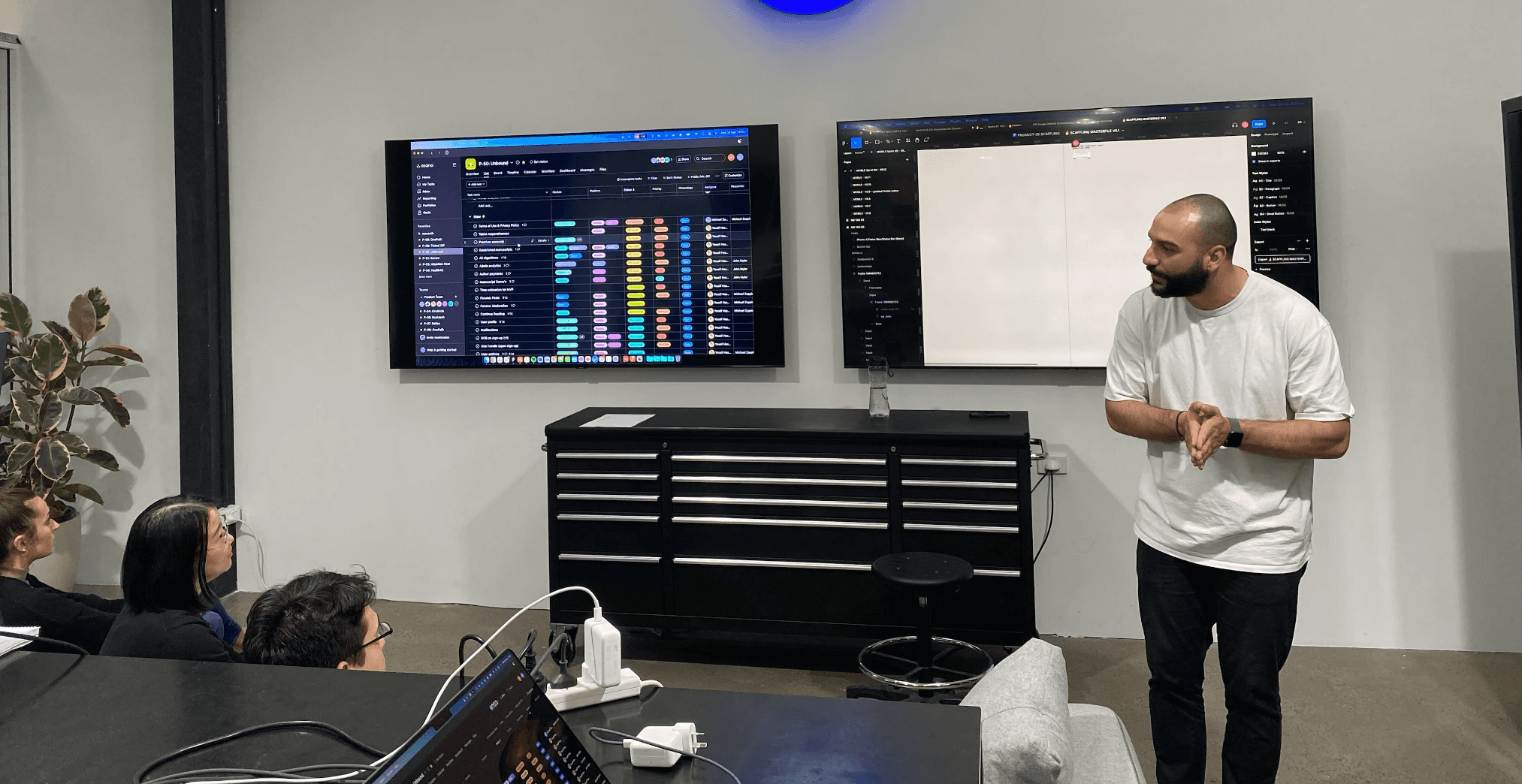

Why not look at this together?
Building internally or with a development agency without structures, systems and skills in place burns your cash and delivers mediocrity at best.
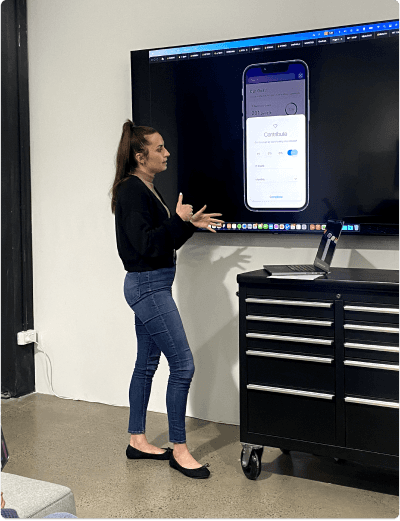
What I offer instead is a straightforward, no-pressure conversation. I listen to how things actually move through your workflows and team, and tell you plainly which systems, skills or structures are missing or wrong.
If it makes sense to go deeper, we can talk about what getting these in place looks like.
If it doesn't, you'll still walk away knowing more than you did before having our chat.
FAQ
Questions we get asked
How is this different from a consultancy or an agency?
We don't have engineers. Can you supply the whole team?
We already have engineers. Why would we bring in more people?
How quickly can you start?
What kinds of organisations do you work with?
What does it cost to get started?
What kinds of expertise can you actually deploy?
If you can't trust what you're looking at, you're making every decision harder than it needs to be.
250+
Organisations and teams we've worked in
Est. 2010
We've been helping with software development
245 years
Combined years building software like yours
Book a call with Sam