Building a cashless gaming wallet that patrons trust, in time for a hard pilot deadline.
Industry
Gaming
Company size
200 - 500 Employees
About
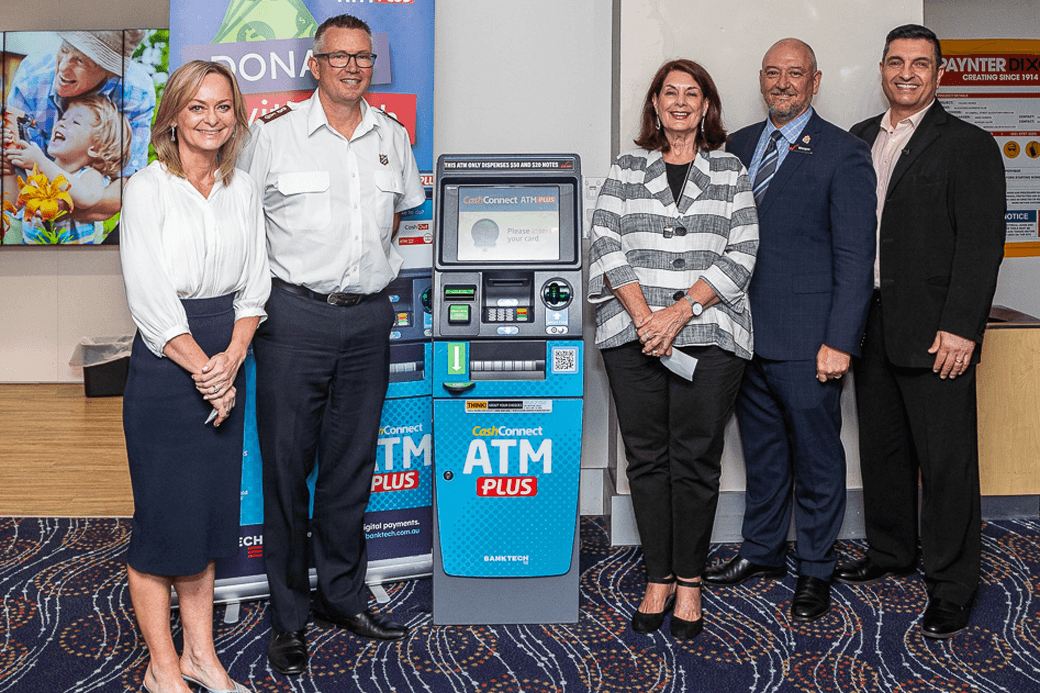
The Banktech Group is an Australia-based technology and payment solutions provider, best known for operating the CashConnect ATM network. Founded in 1991 and headquartered in Sydney, the company specialises in digital payments, cash automation, and gaming technology for the hospitality and gaming industries.
"The workflow between the two teams was very positive."

<0.1%
App crash rate, against an industry standard closer to 1%
47%
Of venue visitors adopted the wallet within six months, ahead of the 40% target
The Situation
Banktech provides payment processing across gaming, retail, and finance, and by 2023 they'd identified a real gap in the market: gaming venues wanted to move away from cash, but the digital wallet solutions available weren't built for the specific regulatory complexity of Australian gaming environments.
The challenge wasn't payments technology itself. Banktech already had EFTPOS terminals, payment gateways, and mobile payment infrastructure in place. The challenge was building a digital wallet that worked within the real constraints of gaming regulation, while staying simple enough for everyday venue patrons to actually use.
In a traditional venue, a patron inserts physical cash into a gaming machine, plays until it's gone, and cashes out with a printed ticket. That friction is deliberate — physical cash creates natural pause points that support responsible gambling. Moving to a digital wallet removes those pause points, which is exactly where the convenience comes from, but it's also exactly why the regulatory bar is higher: a digital wallet for gaming has to build the safeguards back in deliberately, rather than relying on cash to provide them by accident. That meant the product needed:
Responsible gambling controls (spend limits, session timers, self-exclusion options)
Transparent financial settlement with a clear audit trail for venues, patrons, and regulators alike
Tight integration with the gaming machines, EFTPOS terminals, and POS systems already running inside venues, all while staying simple enough for a patron to load money, play, and cash out without friction
The brief was two connected products:
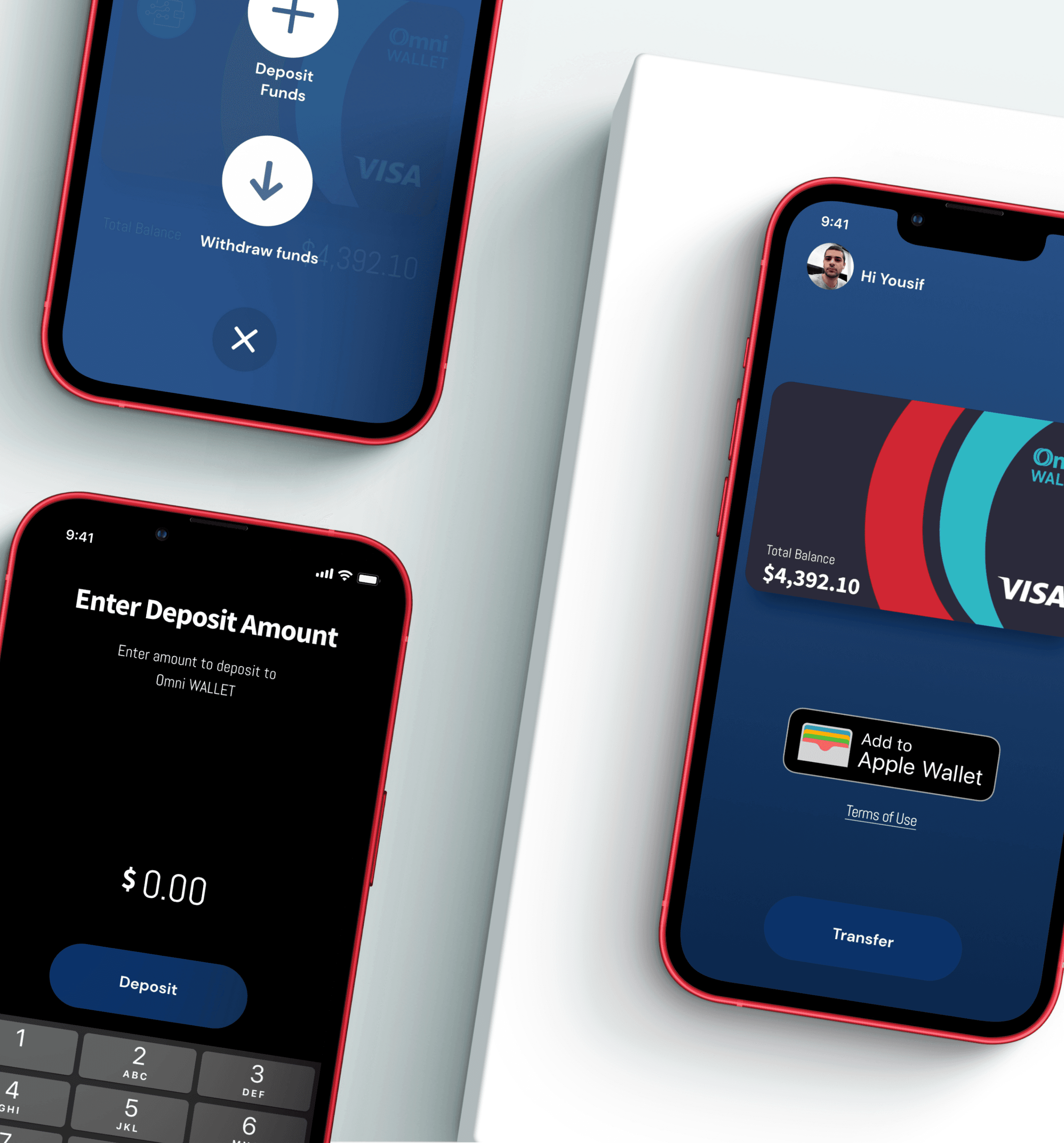
A patron-facing mobile wallet, paired with a physical card that links to a digital balance, supporting fund loading, real-time balance tracking, spend limit controls, and cash-out to a bank account.
A venue and admin-facing web platform handling financial settlement and reconciliation, identity verification for new users, multi-venue management, and the regulatory compliance reporting that auditors and regulators would need access to.
The deadline was real and external: a major venue operator had pilot locations ready to go, and if Banktech couldn't deliver by the final quarter of 2023, that operator would simply evaluate a competitor instead. A delayed launch meant a missed market window, not just a missed internal target.
Why they called us
Banktech's internal team had deep finance and payments expertise. What they didn't have was experience building a consumer-facing mobile product with this much regulatory complexity and this many integration constraints layered on top of each other.
Individually, the technical pieces weren't unusual — mobile apps, a web platform, payment integration Banktech already understood, and a physical card linked to a digital balance. The part that trips up most teams is the integration layer sitting underneath all of that: keeping a patron's balance synced in real time the instant they tap their card at a machine, letting that balance follow them as they move between venues, automatically generating compliance reports across multiple jurisdictions, handling what happens when a network connection drops mid-transaction at a gaming machine, and meeting strict financial security and identity verification standards throughout. This wasn't "build an app and launch it." It was "build a financial system that happens to have a mobile interface."
Banktech's leadership had seen Halcrow's work on other financial infrastructure projects, and the brief reflected that: not "build us an app," but "embed with our team and build this together," because the project needed both technical execution and real product judgement about how this would actually behave in a live venue. Banktech specifically didn't want a vendor who'd disappear after launch — they wanted a team that would be physically present in venues during the pilot, see what broke under real conditions, and iterate quickly based on how patrons actually behaved, not just how the spec assumed they would.
How we worked
An embedded dev pod, not a remote vendor
Halcrow provided a dedicated cross-functional team embedded directly inside Banktech's operations:
2 mobile developers covering iOS and Android natively
2 backend engineers handling the API layer and integrations
1 QA specialist focused on security testing and regulatory compliance
1 product lead translating requirements into real user stories alongside Banktech's own team
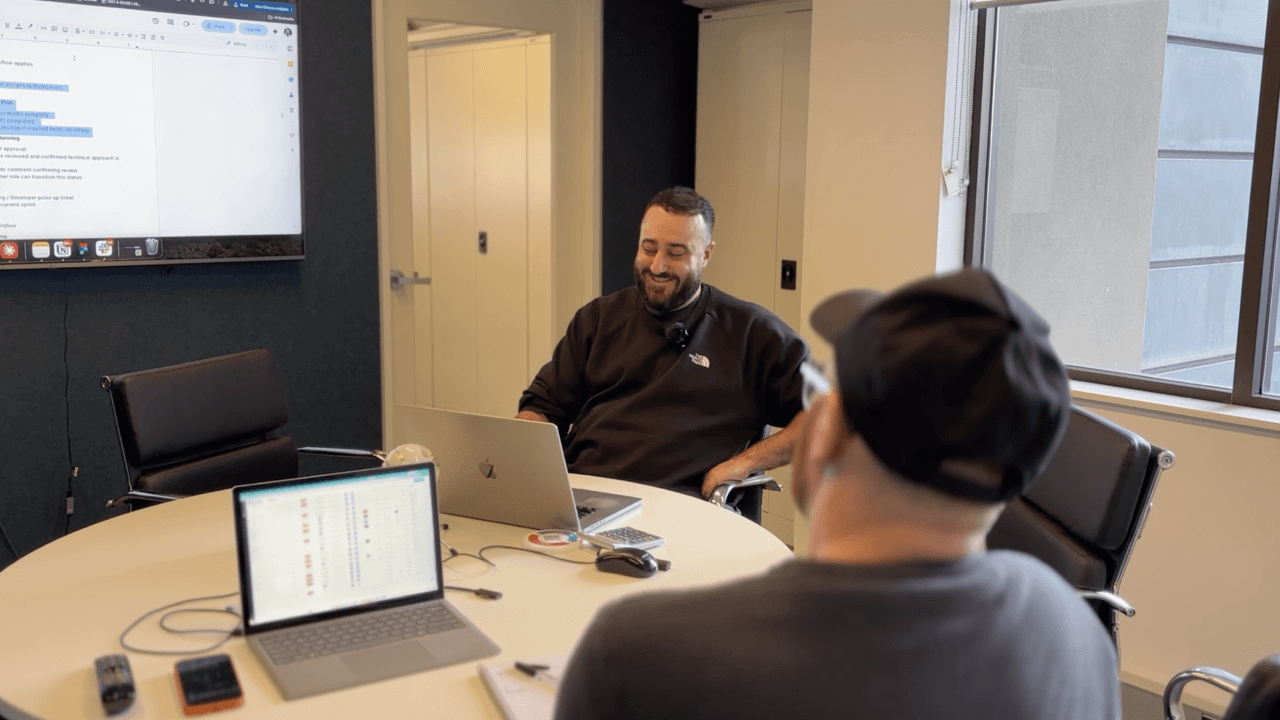
What made this work was proximity. Daily standups with Banktech stakeholders were real coordination on blockers and trade-offs, not status theatre. During the pilot, the team made weekly visits to the live venues, physically present to watch patrons use the app and catch confusion as it happened rather than waiting for a bug report. We had direct access into Banktech's payment infrastructure, moving from a sandbox environment to production access once security review cleared it, with no ticket-and-wait step in between. And Banktech's product team, the Halcrow dev pod, and venue operations all shared the same communication channels, so nothing got lost in translation between groups.
Build structure: a phased rollout, tested against real behaviour
Phase 1: MVP Build (February–June 2023)
Over a four-month sprint, we built native iOS and Android apps, a web platform for venue and admin use, the physical card-to-digital-balance linkage, identity verification for new users, payment gateway integration, and the foundational regulatory reporting. A few decisions here mattered more than they might look: we chose fully native apps over a cross-platform framework because performance genuinely mattered — a patron tapping their card expects an instant balance update, and any UI lag reads as "something's broken." We used a real-time connection for balance updates rather than periodic polling, because a patron needed to actually believe their money was moving the moment it moved. And because venue WiFi is often unreliable, the app was built offline-first, queuing transactions locally and syncing once connectivity returned, since a gaming machine transaction can't simply wait on a network round-trip. Financial security was built in from day one rather than retrofitted, with all financial data encrypted at rest and in transit, and identity verification handled through an established third-party provider rather than something built in-house from scratch.
Phase 2: Pilot Launch (July–October 2023)
Three pilot venues went live, and the most important lessons came directly from watching real patrons, not from a spec. The clearest one: patrons weren't reading instructions. They'd tap the card, see nothing happen because they hadn't opened the app first, and assume the whole thing was broken. We fixed this by changing the onboarding flow itself, forcing new users through a guided "tap your card now" step while the app is already open, so they see their balance update in real time and immediately understand how the system works. Onboarding drop-off fell from 40% to 12% as a direct result. Other fixes followed the same pattern of watching first and adjusting fast: the balance display needed to be three times larger so patrons could read it at arm's length, patrons wanted an explicit notification confirming exactly what they'd just spent, and the original three-tap cash-out flow got reduced to one tap plus a PIN, based directly on patron feedback that a multi-step process felt like an unnecessary barrier to getting their own money back.
We deliberately launched in just three venues rather than rolling out everywhere at once, and each one taught us something different — a second venue ran a different POS system that needed its own adapter, and a third had older gaming machines that needed a firmware update before the integration would work properly.
Roll Out in Small, Reversible Steps
We didn't launch in fifty venues simultaneously. Three venues first, learn, fix, then scale. If the onboarding flow had been broken at fifty venues from day one, the damage to adoption would have been broad and hard to undo. Limiting it to three venues for two weeks meant the problem stayed small and fixable before it ever had the chance to compound.
Phase 3: Scale Rollout (November 2023–August 2024)
By this stage the product had matured, and the work shifted from building new features to making the existing ones hold up at scale — supporting growth from roughly 10,000 to 50,000 patrons without any drop in performance, handling the small configuration differences between every individual venue's existing systems, automating compliance reporting across different state regulators, and managing end-of-day financial reconciliation across multiple venues, banks, and payment processors at once. We also migrated the underlying infrastructure to a more resilient setup that removed several single points of failure, and built a real-time monitoring dashboard for Banktech's own operations team, so that if transaction success rate dropped below 95% at any single venue, the right people were alerted immediately rather than finding out after the fact.

WHAT CHANGED
The product worked under real conditions
Product Performance (August 2024)
The wallet held a 94% average transaction success rate against a 90% target, and patron adoption reached 47% of venue visitors within six months, ahead of the 40% goal. The app's crash rate sat below 0.1%, well under the roughly 2% considered standard for apps of this kind, and a typical cash-out (from tap to confirmation) took about 8 seconds.
Regulatory Compliance
There were zero compliance incidents in the first year of operation, and audits turned up no major findings — only minor recommendations, all implemented within 30 days. Regulatory reporting itself became fully automated, removing the need for any manual report generation.
Before (February 2023): "We have a business opportunity in cashless gaming, but we need a team that can build this fast enough to meet the pilot deadline."
After (August 2024): "Omniwallet is live in venues, patrons are adopting it, and we're in conversations with three more venue operators. The product works."
WHY THIS WORKED
Why being in the room mattered
Greenfield products like this tend to fail in one of three familiar ways: teams over-engineer for scale they don't have yet and push launch out by half a year or more, they under-engineer and ship something fast that simply collapses the moment it meets real-world load, or the product gets built entirely from a requirements document with no real connection to how people actually behave. Banktech avoided all three because of how directly the team was embedded.
Distance Slows Down Iteration
The dev pod was physically present during the pilot launches. When a patron got confused by onboarding, we saw it happen in real time, not in a bug report three days later — and it was usually fixed within the same week.
Smaller Rollouts Reduce the Cost of Being Wrong
Three venues first, then twenty more once the early lessons had been applied. If the onboarding flow had launched broken across fifty venues at once, the damage to adoption would have been far harder to undo than it was when contained to three venues for two weeks.
Shared Downside Keeps Incentives Aligned
Part of our fee was tied directly to patron adoption. If people didn't actually use the wallet, Banktech didn't hit their business case, and we didn't get paid in full either. There was no room for "we delivered exactly what was asked for" if the real outcome hadn't landed — adoption was something we owned together.
what you're buying
If you're building a brand new digital product, especially one with a tight deadline, real regulatory constraints, and a lot of integration surface area, you're not just buying development time. You're buying embedded iteration capability during the riskiest phase of any launch — the pilot.
Most agencies build to a spec, hand it over, and hope it holds up in the real world. This kind of engagement embeds through the pilot itself, so when reality inevitably diverges from the spec, there's a team already in the room to adjust immediately rather than weeks later.
Ready to launch your own product? Contact Sam Halcrow on 0431197004 or sam@halcrow.com.au.
Case study written May 2026. Banktech and Omniwallet are real. All data sourced from project retrospectives, pilot venue reports, and Banktech internal metrics. Timeline and outcomes verified by client stakeholders.
See how other teams are winning with Halcrow

Locked into a CMS they couldn't safely update. We rebuilt it around a team that could run it without us.
Metric #1
Metric #1 description
Read more